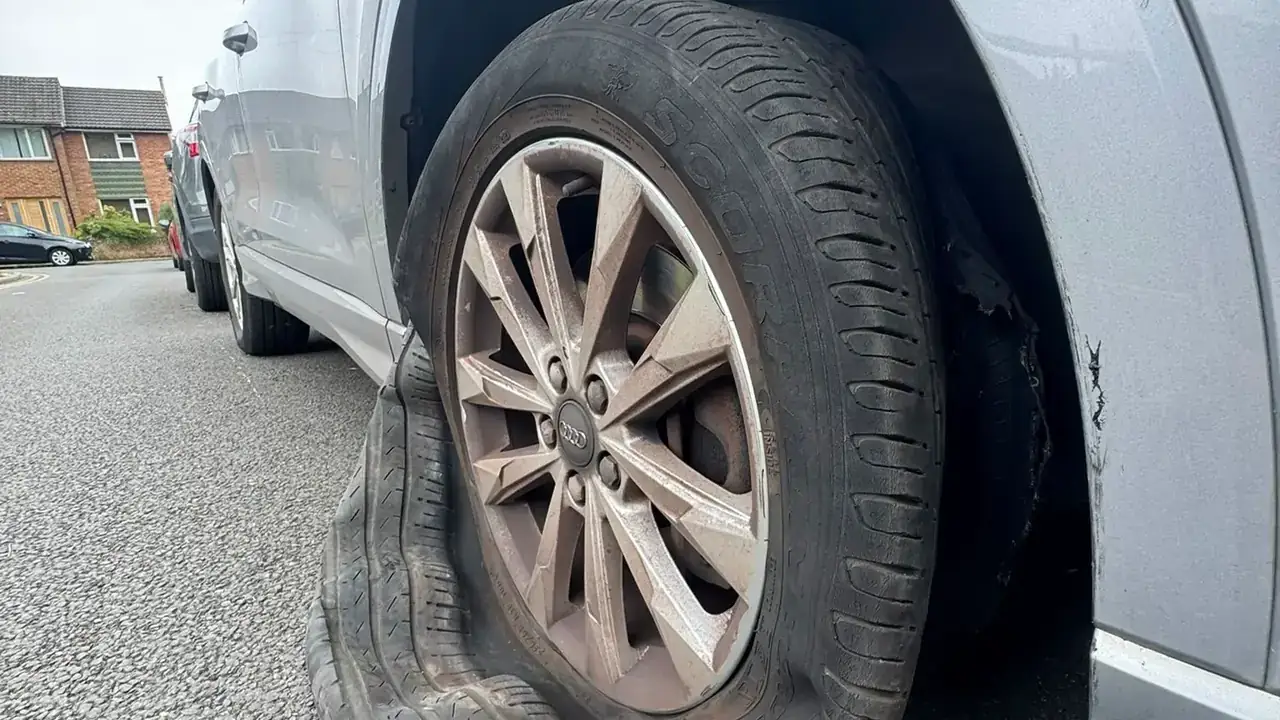

What a bulge in a tyre sidewall means
A tyre is built from layers of textile and steel cords covered in rubber. The cords give the tyre its strength and hold its shape against the air pressure inside.
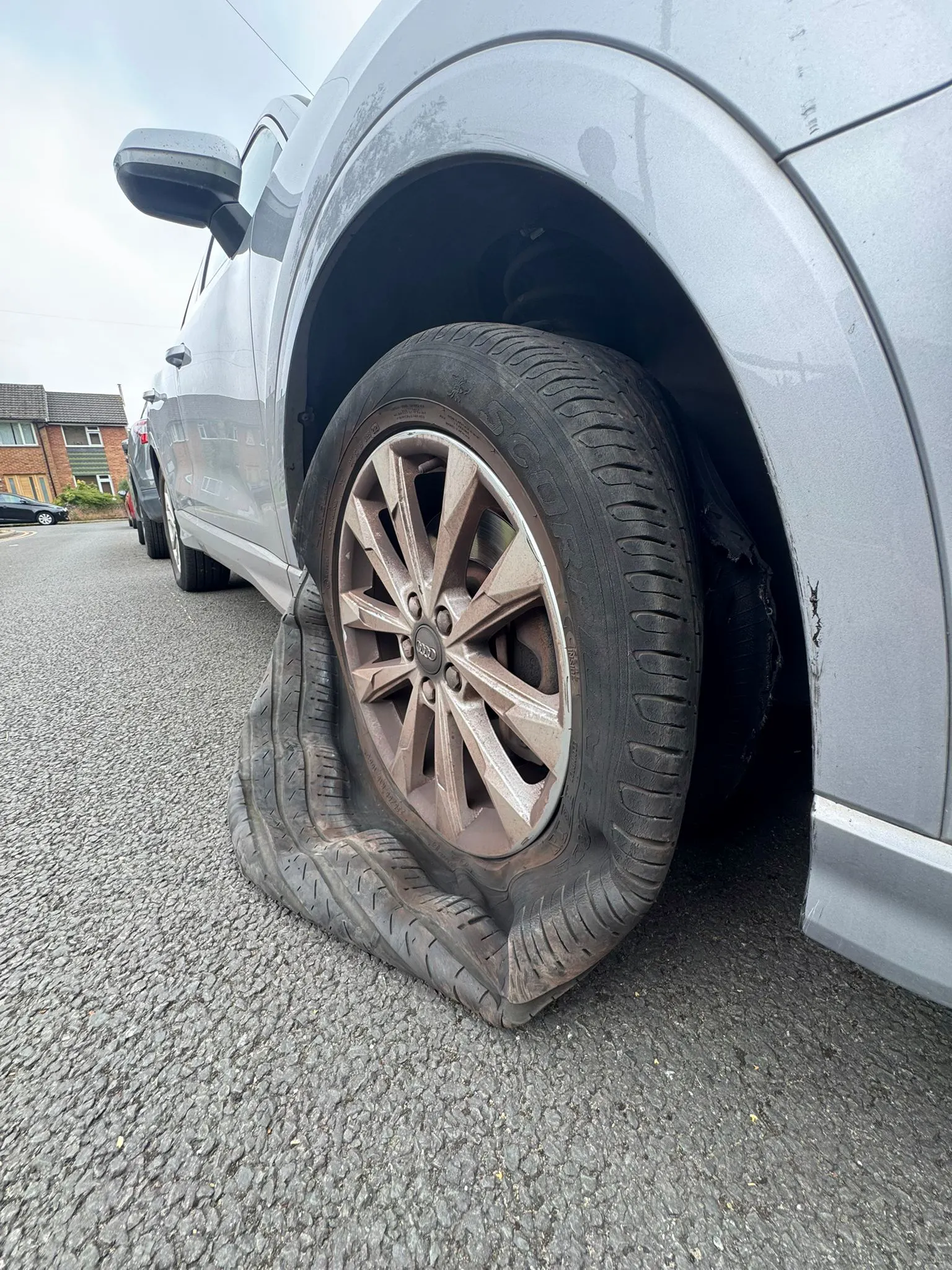
When some of those cords break, air pushes into the weak spot and forces the outer rubber outwards. The result is a bubble or blister on the side of the tyre, which is what drivers usually mean by a bulge in a tyre sidewall.
The bulge is only the visible sign. The real damage is the broken structure underneath, which is why the law and the MOT treat a sidewall bulge so seriously.
What causes a tyre sidewall bulge?
Many bulges follow a sharp impact. When a tyre hits the edge of a pothole or a kerb, the sidewall can be squeezed between the obstacle and the wheel rim, and the cords inside can break without leaving an obvious cut on the outside.
Potholes that open up after winter and tight streets lined with parked cars make this an everyday risk. TyreSafe warns that potholes can cause unseen damage to tyres and wheels, so it is worth checking your tyres after any hard knock and again over the following days.
- Hitting a pothole, especially one with a sharp edge
- Clipping or mounting a kerb, including while parking
- Driving over speed bumps or debris too fast
- Running a tyre under-inflated or overloading the car
- Ageing rubber or a manufacturing defect
Is a bulging tyre dangerous?
Yes. A bulge means part of the tyre is no longer as strong as it was designed to be, and the weak area can fail suddenly. The AA warns that driving on a bulging tyre increases the risk of sudden failure.
A blowout can pull the car sharply to one side and make it hard to control, which is far more serious at speed. Higher speeds and heavy loads also put more strain on the damaged area.
There is no safe size of bulge. A small one still means broken cords underneath, and the law makes no allowance for size.
Is it legal to drive with a bulge in your tyre?
No. Regulation 27 of the Road Vehicles (Construction and Use) Regulations 1986 says a vehicle must not be used on a road if a tyre has any lump, bulge or tear caused by separation or partial failure of its structure.
Using a car with a defective tyre carries the same penalties as driving on tread below the legal limit, with a fine and penalty points possible for each tyre. Our guide to legal tyre tread depth sets out the figures.
A bulge is also a dangerous defect in the MOT, so the car fails. GOV.UK says that after a fail with a dangerous problem you need to get the car repaired before you can drive it, and driving it anyway can lead to a fine, a driving ban and penalty points.
| Tyre condition | On the road | In the MOT |
|---|---|---|
| Lump, bulge or tear caused by the structure failing | Illegal under regulation 27 | Dangerous defect: fail |
| Ply or cords exposed | Illegal under regulation 27 | Dangerous defect: fail |
| Cut over 25mm or 10% of the section width, whichever is greater, deep enough to reach the ply or cords | Illegal under regulation 27 | Major defect: fail |
| Normal undulations in the sidewall from manufacture | Not a defect | Not a reason to fail |
Why a bulging tyre cannot be repaired
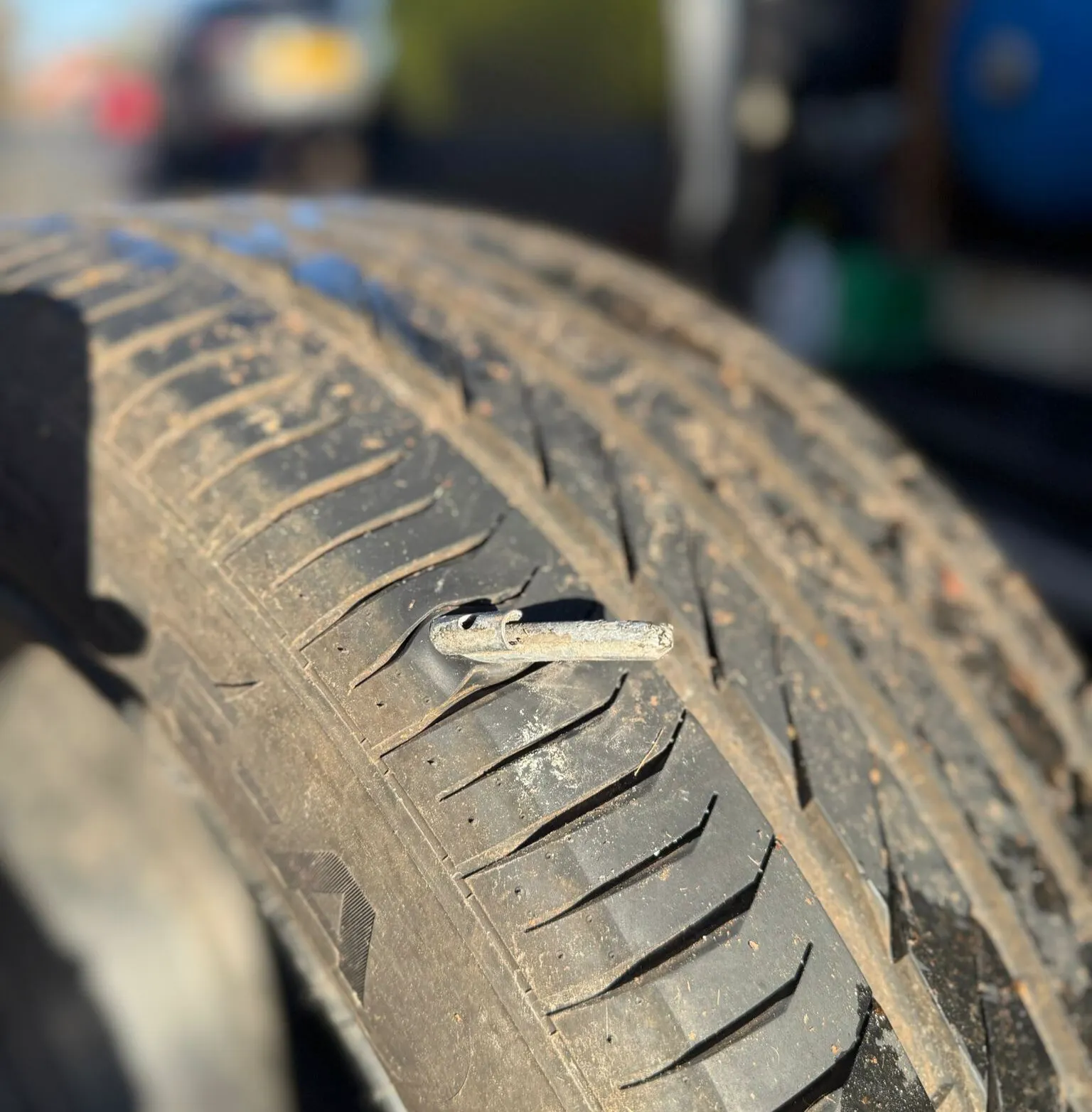
A puncture repair seals a small hole in the tread. A bulge is a different kind of damage, because the cords that hold the tyre together have broken, and no patch or plug can rebuild them.
The British Standard for car tyre repairs, BS AU 159, does not allow repairs to the sidewall or shoulder, and the AA is clear that a bulging tyre cannot be repaired and must be replaced. Sealant from a puncture kit will not help either, as there is no hole to seal.
If you are not sure whether a mark on your tyre is a bulge or something repairable, have it inspected before you rely on it. Our guide on whether a punctured tyre can be repaired explains which damage can be fixed.
Bulge or normal sidewall dip? How to tell
Not every uneven patch on a sidewall is a fault. Radial tyres can show slight dips or waves around the sidewall that come from the way they are made, and the MOT inspection manual tells testers to distinguish these normal undulations from bulges caused by structural deterioration.
A bulge stands out from the sidewall like a blister, usually in one spot, and may sit near a scuff or graze from the impact. A normal dip is a shallow indentation that has been there since the tyre was new.
Check both sides of every tyre. The AA points out that bulges can form on the inner sidewall too, where they are easy to miss, so turn the steering to full lock and use a torch to see the inside of the front tyres.
- Sticks out like a bubble or blister: treat it as a bulge and stop using the tyre
- Shallow dip or wave in the sidewall: often normal, but have it checked if you are unsure
- Bulge with a cut, graze or visible cords: do not drive on it
What to do if you find a bulge
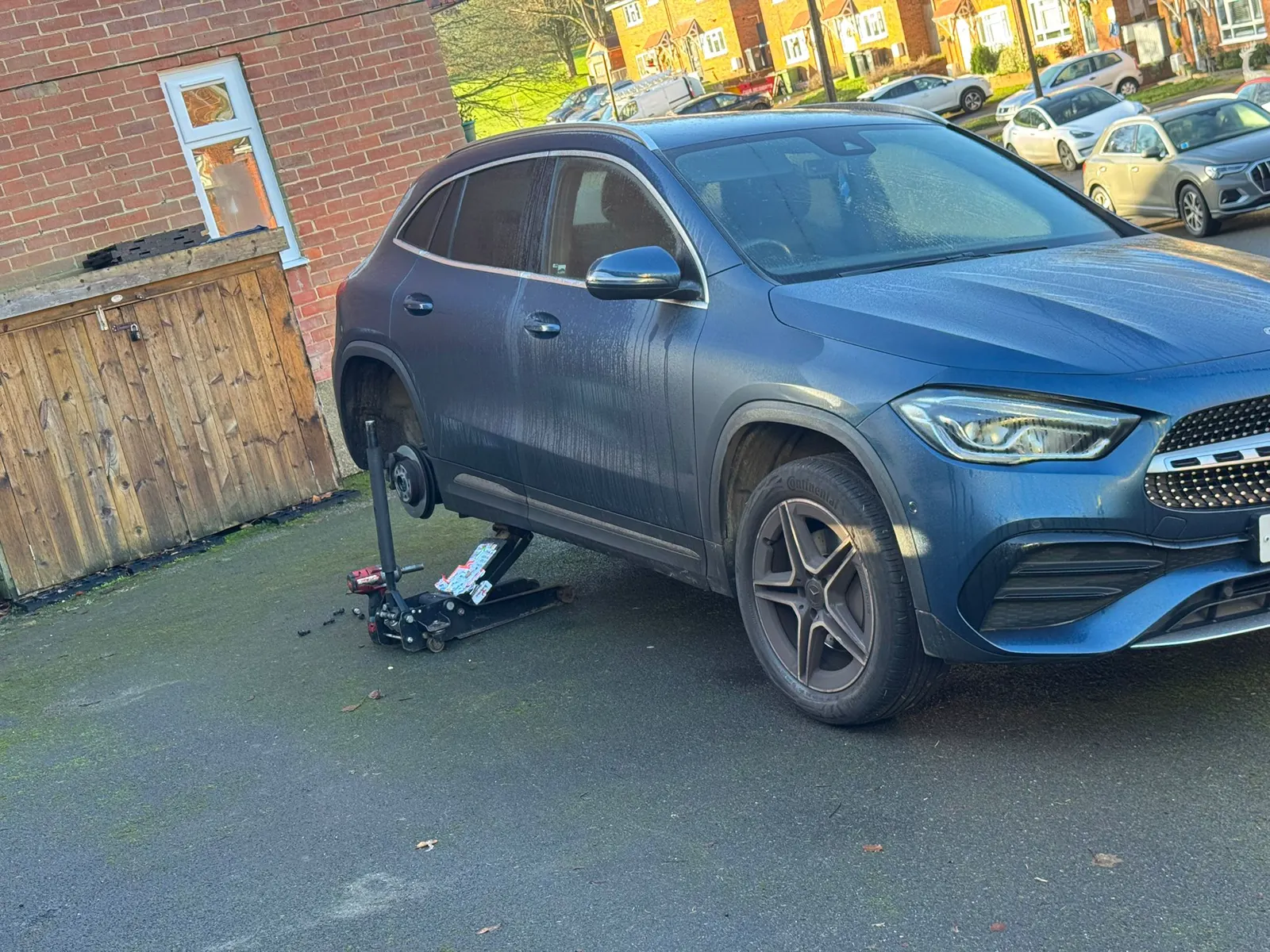
Avoid driving on the tyre. If you spot a bulge at home or at work, leave the car where it is and arrange for the tyre to be replaced there. If you notice vibration or a thumping noise on a journey, slow down gently and stop somewhere safe.
If you have a spare and can change the wheel safely, away from traffic, fitting it is a sensible short-term fix. The law only allows a car to use a temporary space-saver spare at up to 50mph, so keep to that and follow any instructions on the spare.
After a hard impact, check the wheel rim for dents and the other tyres for damage. If the car pulls to one side afterwards, the wheel alignment may have been knocked out, which is worth checking at a garage with alignment equipment.
Our vans come to you, so there is no need to drive on a damaged tyre to reach a garage. Every call-out includes a tyre inspection, and you can reach us 24/7 on 07356 062568.
Related services
A bulging tyre always needs replacing, and our mobile tyre fitting service can fit a new one where the car is parked.
If a damaged tyre fails on the road, our emergency tyre assistance is available 24 hours a day.
New tyres are balanced as they are fitted, and our wheel balancing service can also help if a vibration appears after a pothole strike.
Can a bulge in a tyre be repaired?
No. A bulge means the internal cords are broken, and BS AU 159, the British Standard for car tyre repairs, does not allow sidewall repairs. Sealant and plugs cannot fix it either, because the problem is the structure of the tyre rather than a hole. The tyre has to be replaced.
Can I drive on a tyre with a bulge?
You should not. A bulge makes the tyre illegal to use on the road and raises the risk of a sudden blowout. If you notice one while driving, slow down gently, stop somewhere safe and fit the spare if you can do so safely, or have the tyre replaced where the car is.
Will a tyre bulge fail the MOT?
Yes. The MOT inspection manual lists a tyre with a lump, bulge or tear caused by separation or partial failure of its structure as a dangerous defect. A car that fails with a dangerous defect should not be driven until it has been repaired.
Should I check my tyres after hitting a pothole?
Yes. TyreSafe advises looking for cuts, bulges or tears in the sidewall and checking the pressure, because a drop in pressure can point to internal damage. Look at the inner sidewall as well, and check again over the next few days, since damage is not always visible straight away.
Is a dent in my tyre sidewall the same as a bulge?
Usually not. Shallow dips or waves in the sidewall of a radial tyre are often a normal result of how it was made. A bulge sticks outwards like a blister and points to broken cords. If you cannot tell which you have, have the tyre inspected before relying on it.
Can a bulge appear on the inside of the tyre?
Yes. The AA notes that bulges can form on the inner sidewall, where they are easy to miss. Turn the steering to full lock to see the inside of the front tyres, and use a torch for the rears. A bulge on either side means the tyre needs replacing.