
Mobile TyreFitting Today
Open 24/7 07356 062568
Legal Tyre Tread Depth in the UK
  1. Home
  2. Tyre Advice
  3. Legal Tyre Tread Depth in the UK

Open now · 24 hours, 7 days

Legal Tyre Tread Depth in the UK

Practical advice from 24/7 mobile tyre fitters in Surrey and South London.

  • RAC Accredited Repairer
  • 30 minTypical response
  • 24/7Every day of the year
  • 10,000+Tyres in stock
  • 5+ yrsOn the road

Quick answer: The legal tyre tread depth in the UK for cars is 1.6mm across the central three-quarters of the tread, around the entire circumference of the tyre. Driving on tyres below this can mean a fine of up to £2,500 and 3 penalty points for each illegal tyre.

The legal tyre tread depth in the UK

The legal tyre tread depth in the UK for cars is 1.6mm. That depth must be present across the central three-quarters of the tread width, and around the entire circumference of the tyre.

In practice, this means a tyre can be illegal even if most of it looks fine. A tyre worn down on one section, or along the central band, can fall below the limit while the edges still have tread. That is why it is worth checking in more than one place.

Tread depth is not the only legal requirement. Tyres with serious cuts, bulges, lumps or exposed cords can also be illegal regardless of how much tread is left, and tyres must be suitable for the vehicle and correctly inflated.
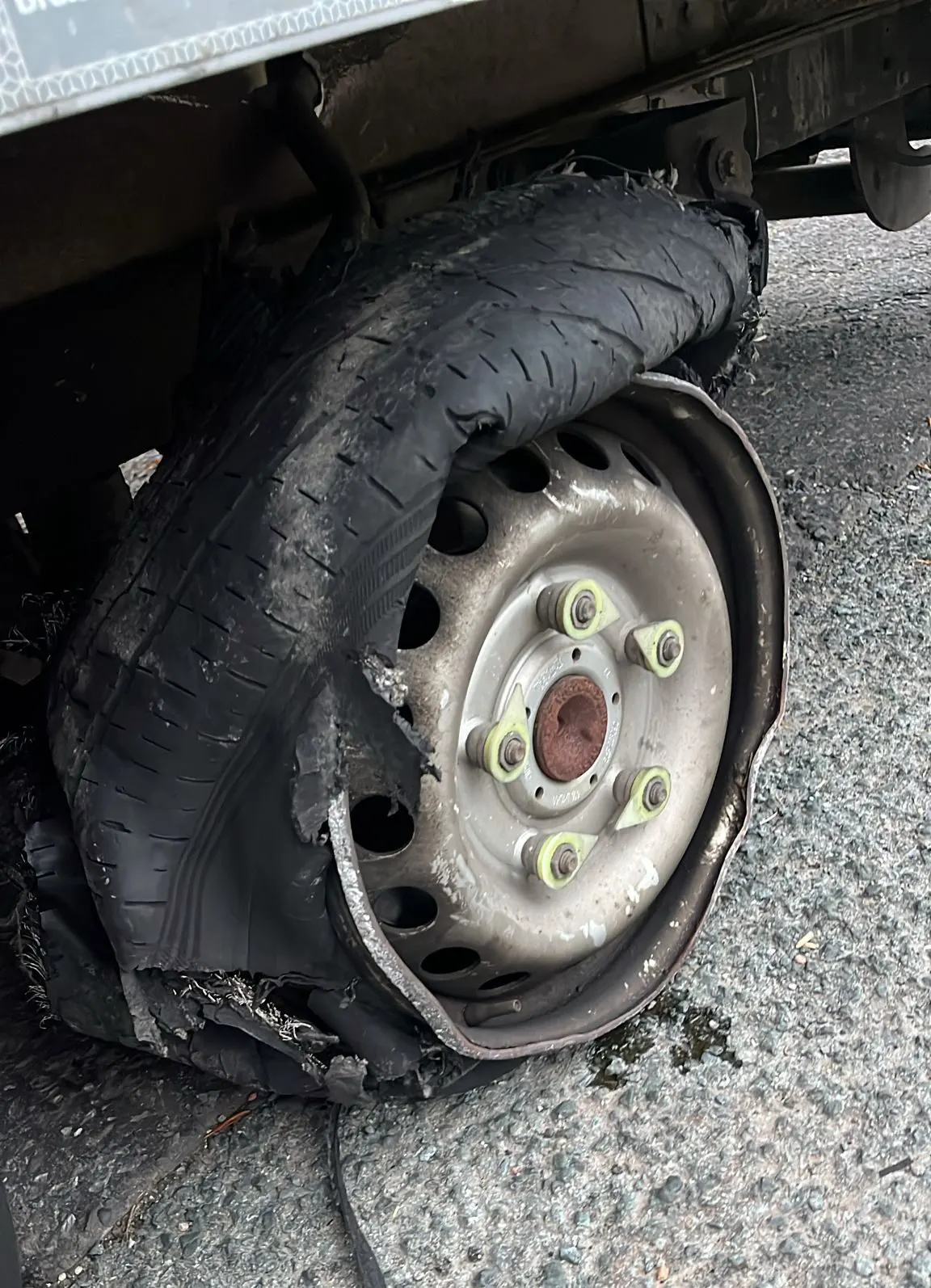
Penalties for illegal tyres

If the police find a tyre below the legal limit, the penalty can be a fine of up to £2,500 and 3 penalty points. That applies per illegal tyre, so four worn tyres could in theory mean four times the fine and twelve points, which is enough to lose a licence.

Worn tyres are also an MOT failure, and they can create problems with an insurance claim if they contributed to an accident. The bigger issue is safety: less tread means less grip, especially in the wet.

Checking your own tyres takes a couple of minutes, and it is far easier than dealing with a roadside stop, an MOT failure or a tyre that lets you down in the rain.

Why tread depth matters on wet roads

The grooves in a tyre channel water away from the contact patch, the small area of rubber actually touching the road. As the tread wears, there is less room to clear water, so grip falls and stopping distances get longer on wet roads.

This is most noticeable in heavy rain, on standing water and on roads with poor drainage, all common across the UK in autumn and winter. A tyre at the legal minimum is legal, but it will not perform the way it did when new.

Dark winter mornings, leaves on country lanes and heavy spray on the motorway all make grip more important. If your tyres are getting low in autumn, replacing them before winter gives you more margin in the conditions where you need it most.

How to check your tread depth

The most accurate way is with a tread depth gauge, a cheap tool sold at most motor accessory shops. Push the probe into the main grooves at several points across the width and around the tyre, and read the lowest figure.

Check all four tyres, and the spare if you have one. Turn the steering to full lock to see the front tyres more easily, and roll the car a short distance to check the part of the tyre that was touching the ground.

A monthly check, done at the same time as your tyre pressures, is a good habit. Do it before long journeys and before winter as well. If you carry a full-size spare, check that too, as it needs to be legal before it goes on the car.

  • Measure in the main grooves, not the small cuts (sipes) in the tread blocks
  • Check the inner, middle and outer parts of the tread
  • Check at three or four points around the tyre
  • Use the lowest reading you find as the tyre's tread depth

The 20p test: a rough guide

If you do not have a gauge, the 20p test gives you a quick indication. Put a 20p coin into the main tread grooves. If the outer band of the coin is hidden by the tread, the tyre is likely above the legal limit. If you can see the outer band, the tread may be close to or below 1.6mm.

Treat the 20p test as a rough guide only. It cannot give you an exact figure, and coins and tyres vary. If the test suggests your tread is low, have the tyres measured properly with a gauge.

Repeat the test at several points across the width and around each tyre, because wear is not always even. A tyre that passes in one spot can be much lower in another, particularly if the wheel alignment or pressures have been out.

Tread wear indicators

Most car tyres have tread wear indicators built in. These are small raised bars of rubber sitting across the bottom of the main grooves, set at 1.6mm. Some tyres mark their positions on the shoulder with a small triangle or the letters TWI.

When the surface of the tread is level with these bars, the tyre has reached the legal limit and needs replacing. If the tread is getting close to them, it is time to plan for new tyres.

Tyre pressures play a big part in how evenly tread wears. Under-inflated tyres tend to wear on both outer edges, while over-inflated tyres tend to wear in the centre. Keeping pressures at the figures in your handbook helps the tread last longer and stay even across the width.

When to replace tyres before 1.6mm

The legal tyre tread depth is a minimum, not a target. Many tyre makers and motoring organisations suggest considering replacement at around 3mm, because wet grip drops off as tyres near the limit.

Uneven wear is another reason to act early. If one edge is wearing faster than the rest, it can point to incorrect pressures, wheel alignment issues or worn suspension. Replacing the tyre without finding the cause just means the new one wears the same way.

Look for damage too. Cuts, bulges, cracking or exposed cords mean a tyre should be replaced regardless of how much tread it has left.

When you replace tyres, doing both tyres on the same axle together is usually recommended so grip is even from side to side. If only one is worn, call us with your tyre size and the tread depth of the other tyre, and we will help you decide.

  • Tread at or approaching 3mm, especially before winter
  • Uneven wear on one edge or in patches
  • Bulges, cuts, cracks or exposed cords
  • Old tyres showing signs of ageing, such as sidewall cracking

How Mobile Tyre Fitting Today can help

If your tread is close to the limit, or you are not sure, call us on 07356 062568. We work 24/7 and come to your home, workplace or roadside across Surrey, south and south-west London and West Sussex.

Every visit includes a tyre inspection, and our vans carry premium, branded and economy tyres from a stock of more than 10,000. We reach most locations within 30 minutes. Give us your tyre size when you call and we will confirm what we have for your car.

Related services

If your tyres are close to the limit, our mobile tyre fitting service can replace them at home or at work.

Front tyres on front-wheel-drive cars often wear faster, and wheel rotation helps the set wear more evenly.

New tyres are balanced as they are fitted, and our wheel balancing service also helps reduce uneven wear from vibration.

Questions drivers ask

Still unsure? Call 07356 062568 any time, day or night.

07356 062568

What is the legal minimum tread depth in the UK?

For cars, the legal minimum is 1.6mm across the central three-quarters of the tread, around the entire circumference of the tyre. A tyre that falls below this at any point in that central area is illegal, even if other parts of the tyre still have more tread.

What is the fine for bald tyres in the UK?

Driving with a tyre below the legal tread depth can mean a fine of up to £2,500 and 3 penalty points per illegal tyre. With more than one worn tyre, the penalties can add up quickly. Worn tyres will also fail an MOT.

Is the 20p test accurate?

It is a rough guide only. If the outer band of a 20p coin is visible when placed in the main grooves, your tread may be close to or below the legal limit. For an accurate reading, use a tread depth gauge or ask a tyre fitter to measure it.

Should I replace tyres at 3mm?

Many tyre makers and motoring organisations suggest considering replacement at around 3mm, because grip on wet roads falls as tread wears. You are not legally required to replace them until 1.6mm, but changing them earlier is a sensible choice, especially before winter.

Why are my tyres wearing on one edge?

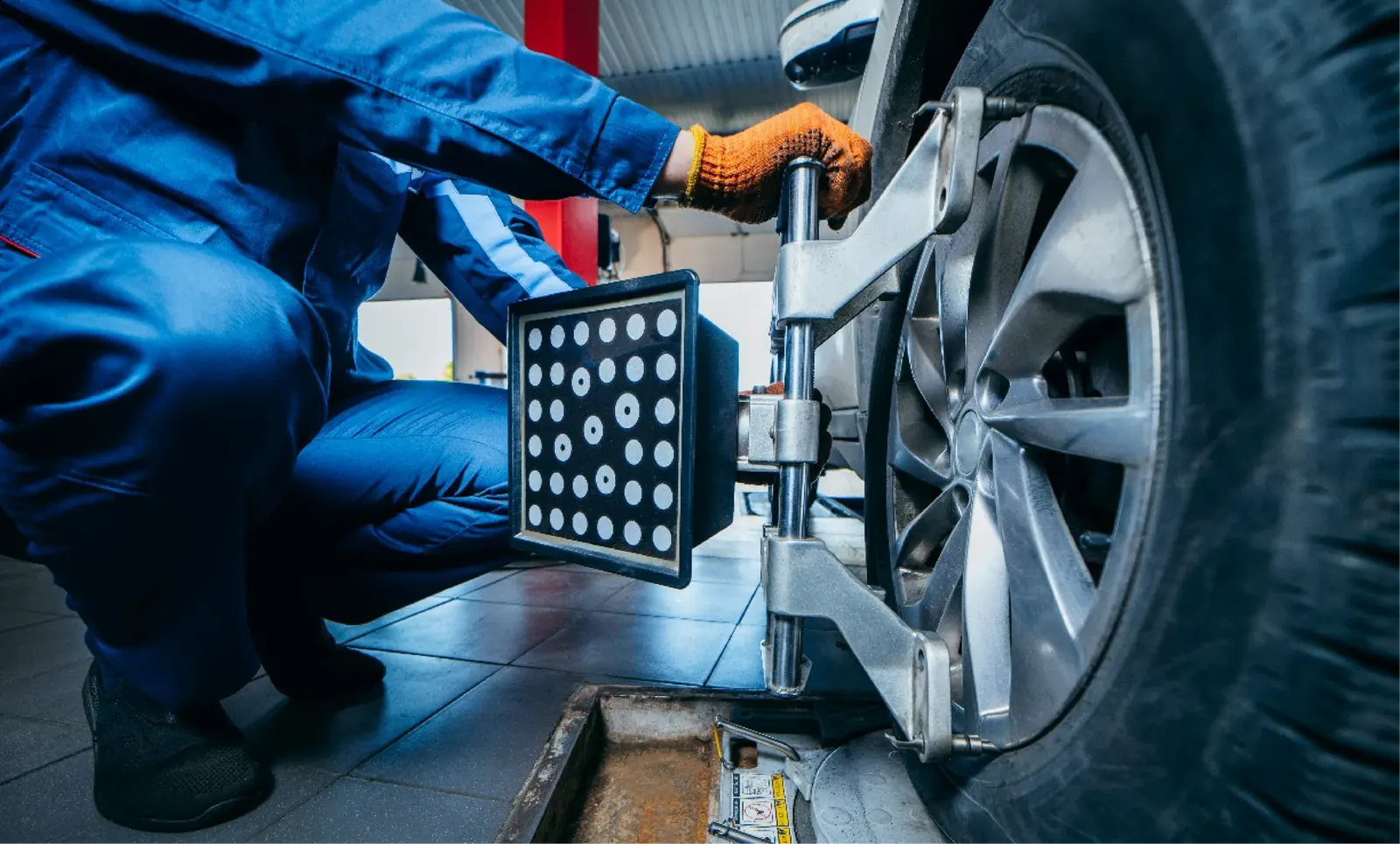
Wear on one edge is often linked to wheel alignment, incorrect tyre pressures or worn suspension parts. It is worth having the alignment checked at a garage with alignment equipment. Replacing the tyre without fixing the cause usually means the new tyre wears the same way.

Need a tyre fitted now?

07356 062568

Our mobile tyre fitters come to your home, workplace or roadside across Surrey, South London and West Sussex, 24 hours a day.

Call nowWhatsApp