
Can you drive with a nail in your tyre?
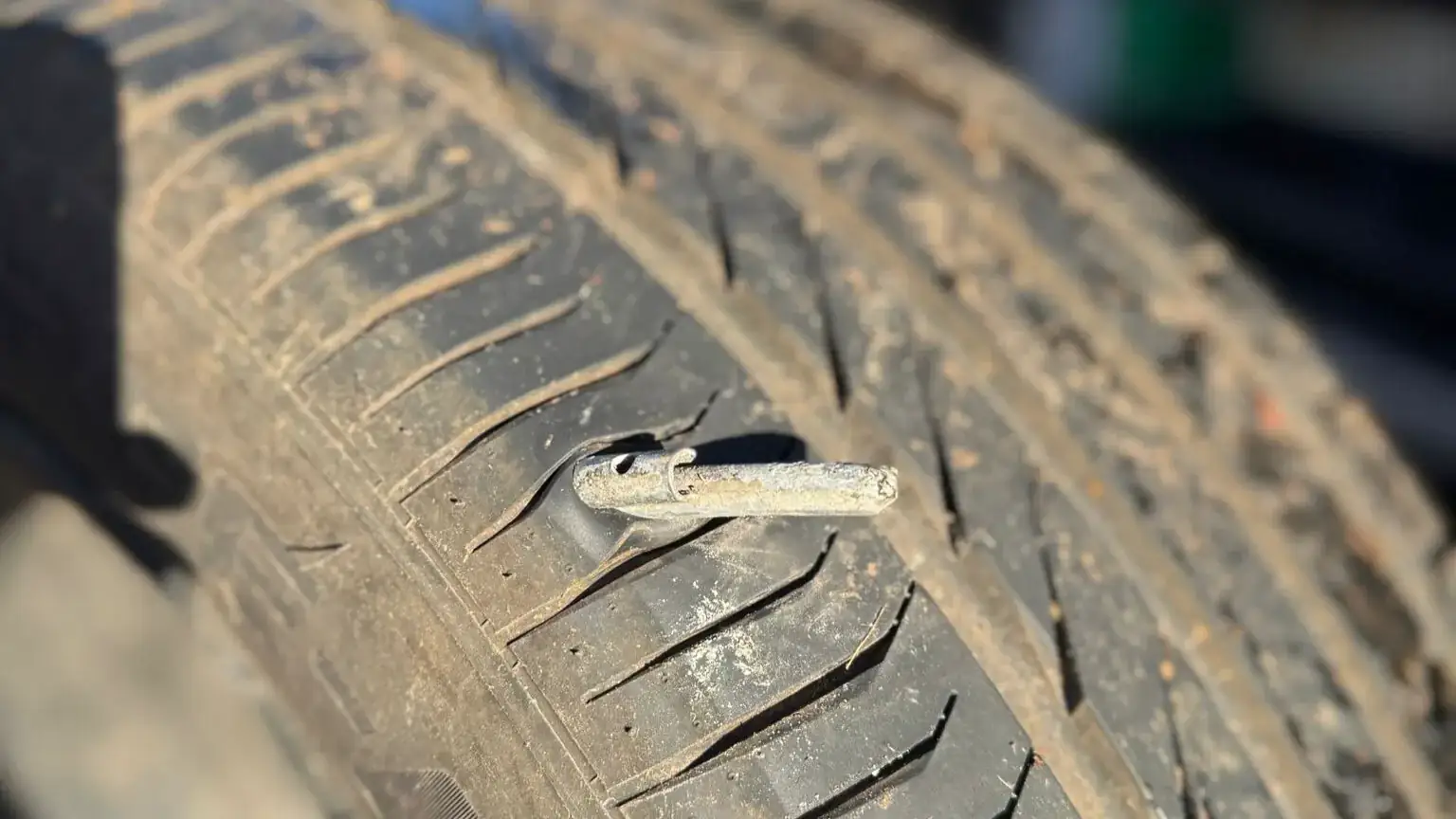
It depends on whether the tyre is still holding air. A nail often stays in the hole and slows the leak, so the tyre can look and feel normal for a while. That does not make it safe to ignore, because the leak can speed up and leave you with a flat.
TyreSafe says that in some cases you may be able to drive a short distance on a punctured tyre, but only at low speeds and only as far as you need to reach a garage or a safe place. The RAC's advice for a nail or screw in a tyre is to leave it in place and have the tyre inspected.
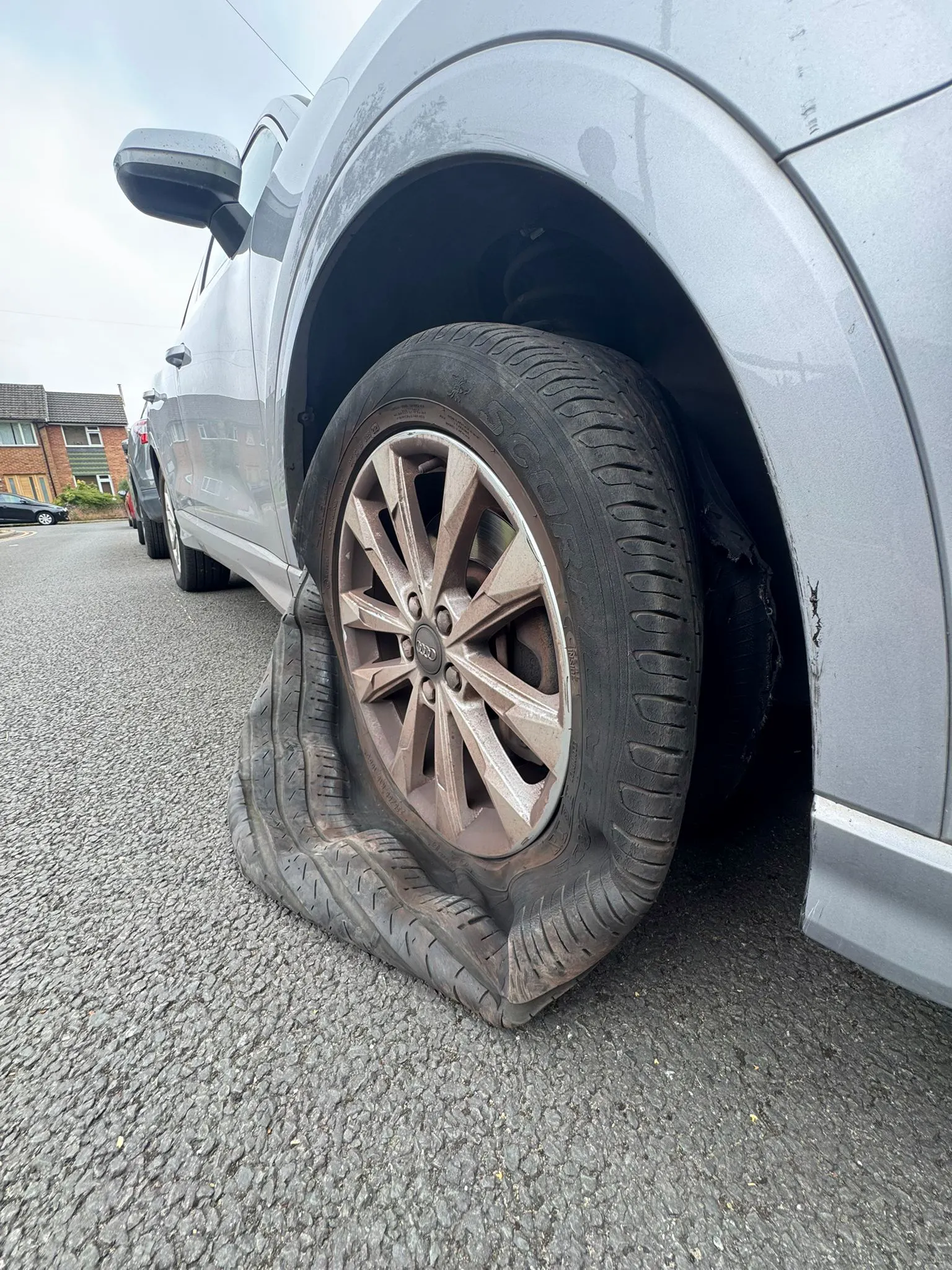
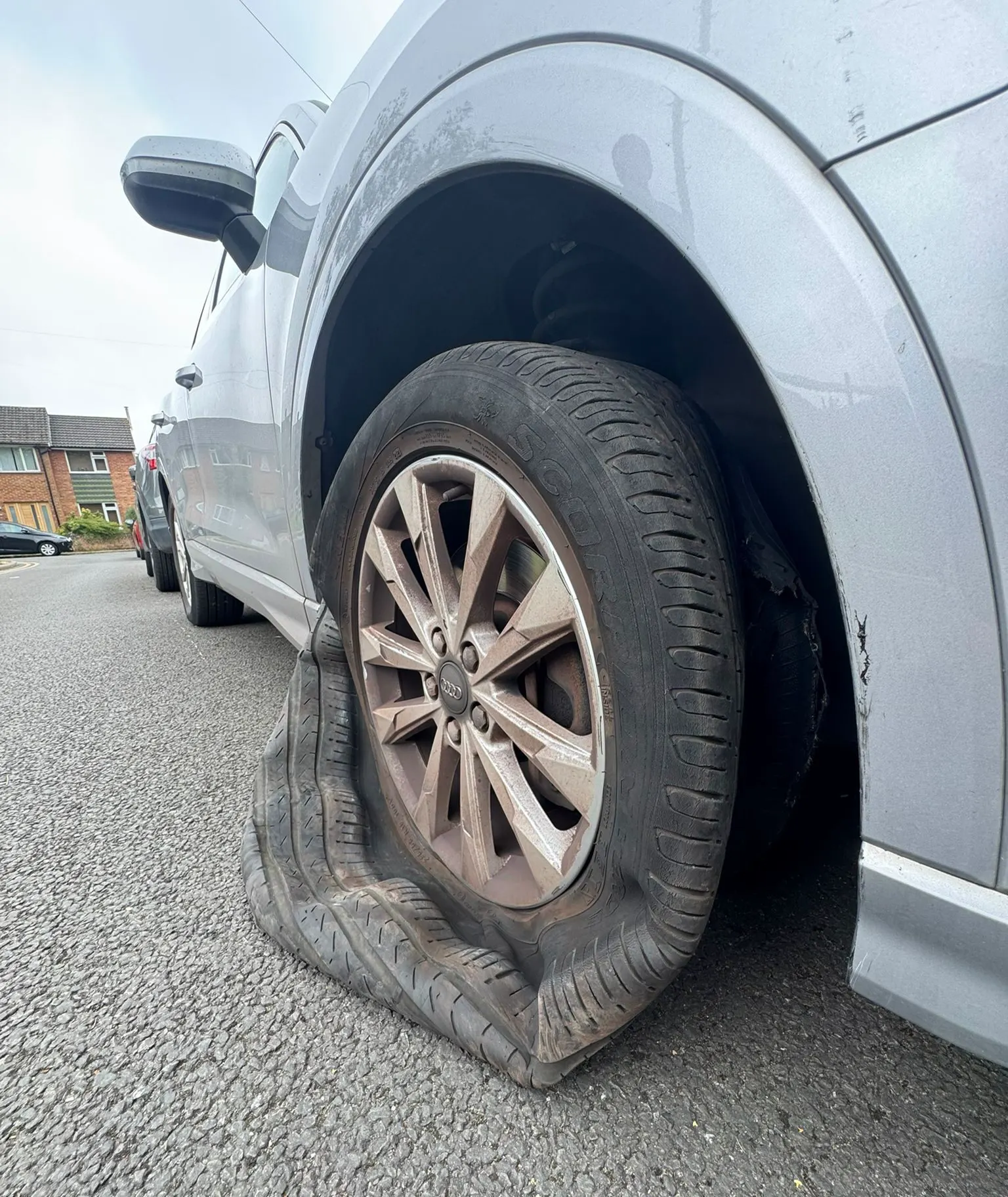
If the tyre is flat or going down quickly, do not drive on it. The RAC warns that driving on a flat tyre risks losing control, and that doing it for long enough can damage parts such as the brake lines, suspension and wheels.
| What you find | What to do |
|---|---|
| Nail in the central tread, tyre holding its pressure | Leave the nail in. If you must move the car, drive slowly and only as far as a safe place, then have the tyre inspected |
| Nail in the tread, tyre slowly losing pressure | Inflate it to the handbook pressure if you can, then drive only a short distance at low speed and recheck it |
| Tyre flat or losing air quickly | Do not drive on it. Stop somewhere safe and call for help |
| Nail in the shoulder or sidewall | The tyre will need replacing, so avoid driving on it and arrange a new tyre |
Why you should leave the nail in
Pulling the nail out is an easy mistake to make. The RAC says removing it may simply make the hole bigger, and Goodyear advises leaving anything that looks as if it has gone through the rubber until you can get to a garage, or you are likely to end up with a flat tyre.
Leaving it in also marks exactly where the damage is. That matters, because the position of the hole decides whether a repair is possible at all.
Small stones caught in the tread grooves are a different matter. Goodyear notes that things get stuck in the tread all the time and are usually easy to remove. The advice to leave it alone is for objects that have pierced the tyre, such as nails, screws and pieces of glass.
Avoid roadside plug kits that push a plug into the hole from outside. BS AU 159 does not apply to externally inserted plugs, which it describes as temporary seals until a permanent repair can be made.
How to check a tyre with a nail in it
Park somewhere safe and level, away from traffic, before you look. A few quick checks will tell you whether the car can be moved at all, and they help the fitter when you call.
Note where the nail sits: in the middle of the tread, near the outer edge or in the sidewall. A little soapy water around the nail head will bubble if air is escaping, a method Goodyear suggests for finding a leak. Take a photo of the nail and of the tyre size on the sidewall.
- Check the pressure with a gauge and compare it with the handbook figure
- Note whether the nail is in the centre of the tread, near the edge or in the sidewall
- Look for other damage, such as cuts, bulges or a crease in the sidewall
- Use soapy water around the nail to see whether it is leaking
- Photograph the nail and the tyre size for the fitter
- Recheck the pressure before and after any short drive
Can a nail in a tyre be repaired?
Car tyre repairs in the UK are governed by British Standard BS AU 159, and the current edition is BS AU 159G:2013. TyreSafe explains that repairs can only be made in the central three-quarters of the tread, and that a permanent repair needs the tyre removing from the wheel so it can be inspected inside and out.
The size of the hole matters too. Goodyear says a puncture limited to the centre of the tread and smaller than 6mm should be repairable, while a larger hole, or one on or near the sidewall, means replacing the tyre.
The inspection can still rule a repair out. TyreSafe lists reasons such as damage caused by under-inflation, damage to the bead or casing, deterioration of the inner liner and earlier repairs that do not meet the British Standard. Our guide to whether a punctured tyre can be repaired covers the rules in more detail.
Nail in the shoulder or sidewall: why it means a new tyre
The shoulder is the rounded outer edge of the tread, where it turns down into the sidewall. It sits outside the central repairable area, so a nail in the shoulder means a new tyre even if the hole is tiny.
The sidewall is ruled out for the same reason, and the risks are higher. Goodyear explains that the sidewall carries most of the load of the car, so any damage there compromises the tyre and raises the risk of a blowout. TyreSafe says that if a puncture has caused damage close to or on the sidewall, a repair is not possible.
Until the tyre is replaced, drive on it as little as possible and never at speed. If it is losing air, leave the car where it is and have the tyre changed there.
Getting the tyre checked
Even if a nail in your tyre seems to cause no trouble, have it inspected soon rather than waiting for it to go flat. A tyre that runs under-inflated, or is driven on while flat, is far less likely to be repairable.
Every call-out we attend includes a tyre inspection to decide whether a safe repair is possible or a replacement is needed, and you can call us on 07356 062568 24/7. If you have used a sealant kit, say so when you call, because the sealant has to be cleaned out before the tyre can be inspected.
Related services
If the nail is in the central tread, our mobile tyre repair service can inspect the tyre where the car is parked.
If the nail is in the shoulder or sidewall, our mobile tyre fitting service can replace the tyre at home or at work.
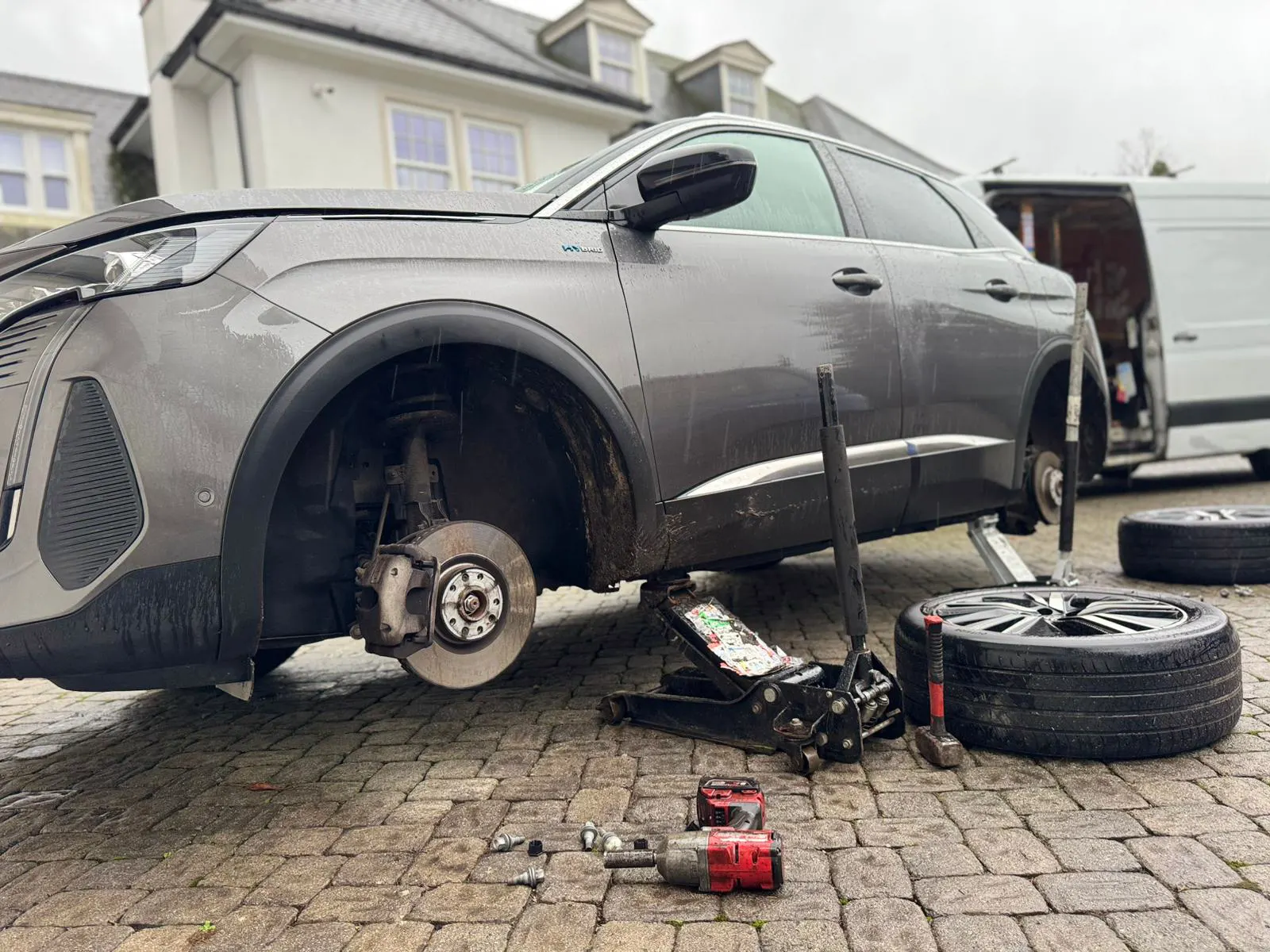
If the tyre has gone flat, our 24-hour emergency tyre assistance can come to you.
Should I pull a nail out of my tyre?
No. Leave it in place until the tyre has been inspected. The RAC says removing a nail may simply make the hole bigger, and Goodyear warns that pulling out something that has gone through the rubber is likely to leave you with a flat tyre.
How far can I drive with a nail in my tyre?
There is no safe set distance. TyreSafe says you may sometimes be able to drive a short distance at low speed to reach a garage or safe place, but you should avoid higher speeds and driving further than necessary. Check the pressure first and have the tyre inspected as soon as you can.
Can I drive on the motorway with a nail in my tyre?
It is best avoided. TyreSafe advises against driving at higher speeds on a punctured tyre, and a tyre that deflates at motorway speed is much harder to deal with safely. Have it inspected before any long or fast journey.
Is a nail in the sidewall repairable?
No. Under BS AU 159, repairs are only made in the central three-quarters of the tread. TyreSafe says that if a puncture has caused damage close to or on the sidewall, a repair is not possible, so the tyre needs replacing.
Is it illegal to drive with a nail in your tyre?
The law looks at the condition of the tyre rather than the nail itself. The Highway Code says tyres must be correctly inflated to the manufacturer's specification for the load being carried, and the RAC notes that driving on a defective or unsafe tyre could mean 3 penalty points and a fine of up to £2,500 per tyre.
Will a tyre sealant kit fix a nail puncture?
It may get you to a fitter if the hole is in the main tread and within the kit's limit, which the RAC says commonly ranges from 4mm to 6mm. It is only a temporary fix. Tell the fitter you have used sealant, because it has to be cleaned out before the tyre can be inspected.