
What is a slow puncture?
A slow puncture is a leak that lets air out of a tyre gradually rather than all at once. The tyre keeps losing pressure whether the car is moving or parked, so the first clue is often a tyre that looks low after a night on the drive.
How fast it goes down depends on the cause and the size of the leak. The RAC says it can take hours, days or even up to a week, which makes it easy to miss until the tyre is visibly soft.
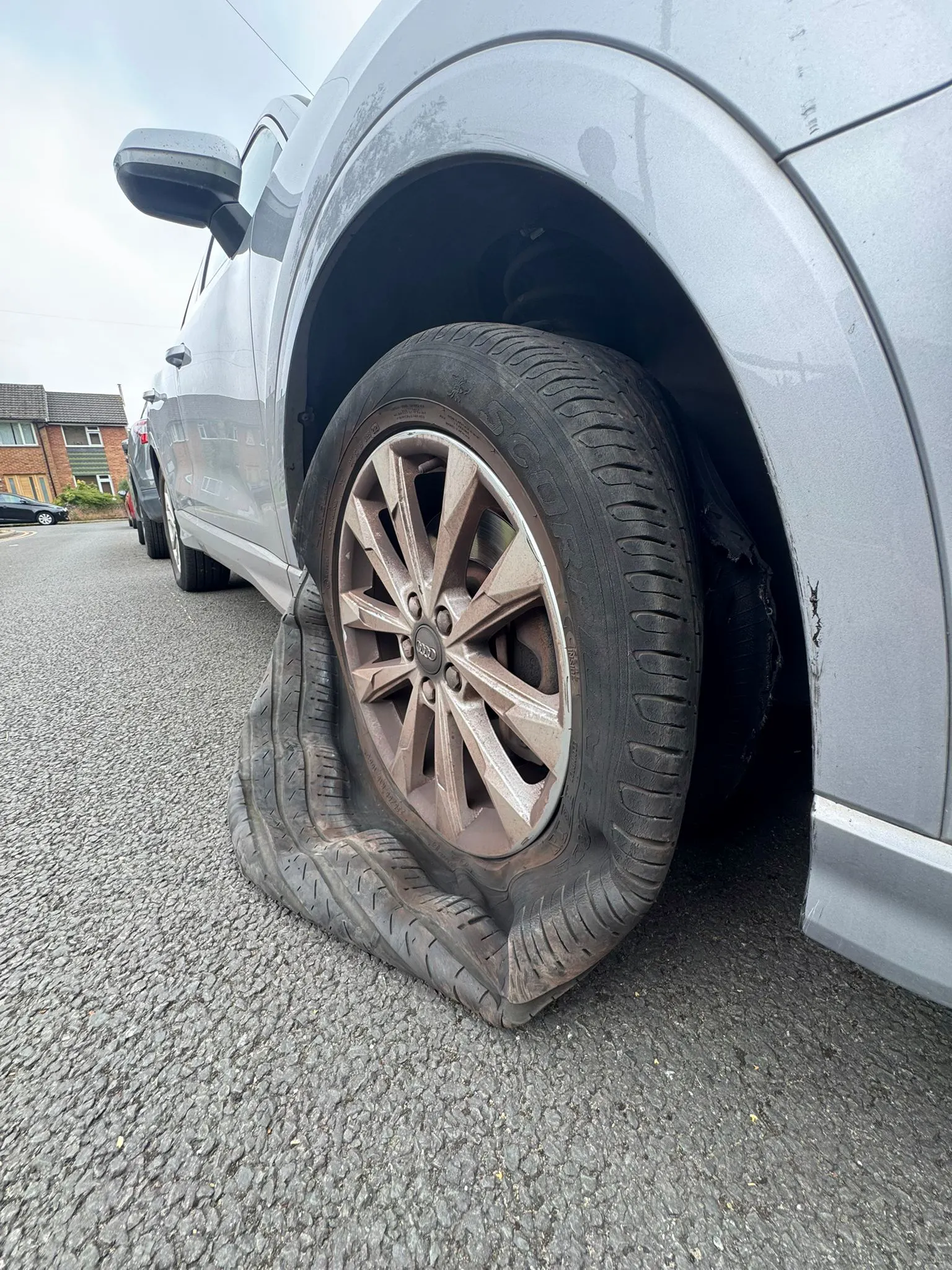
Small leaks still matter. The Highway Code says tyres must be correctly inflated to the manufacturer's specification for the load being carried, and that under-inflated tyres affect your brakes and steering. A tyre left to run low can also be damaged inside, which may rule out a repair later.
Signs of a slow puncture
On newer cars the tyre pressure warning light is often the first clue. TyreSafe advises that it should not be ignored: find a safe place to stop and check the pressures with a gauge.
On the road, a soft tyre changes how the car feels. The RAC lists pulling to one side, especially when braking or accelerating hard, and handling that feels heavier or less responsive in corners.
- A tyre that needs topping up more often than the others
- One tyre that looks lower than the rest after the car has been parked
- A pressure warning light that returns after you add air
- Pulling to one side, most noticeably under braking or hard acceleration
- Heavier or less responsive steering when cornering
- One side of the tread wearing faster than the other
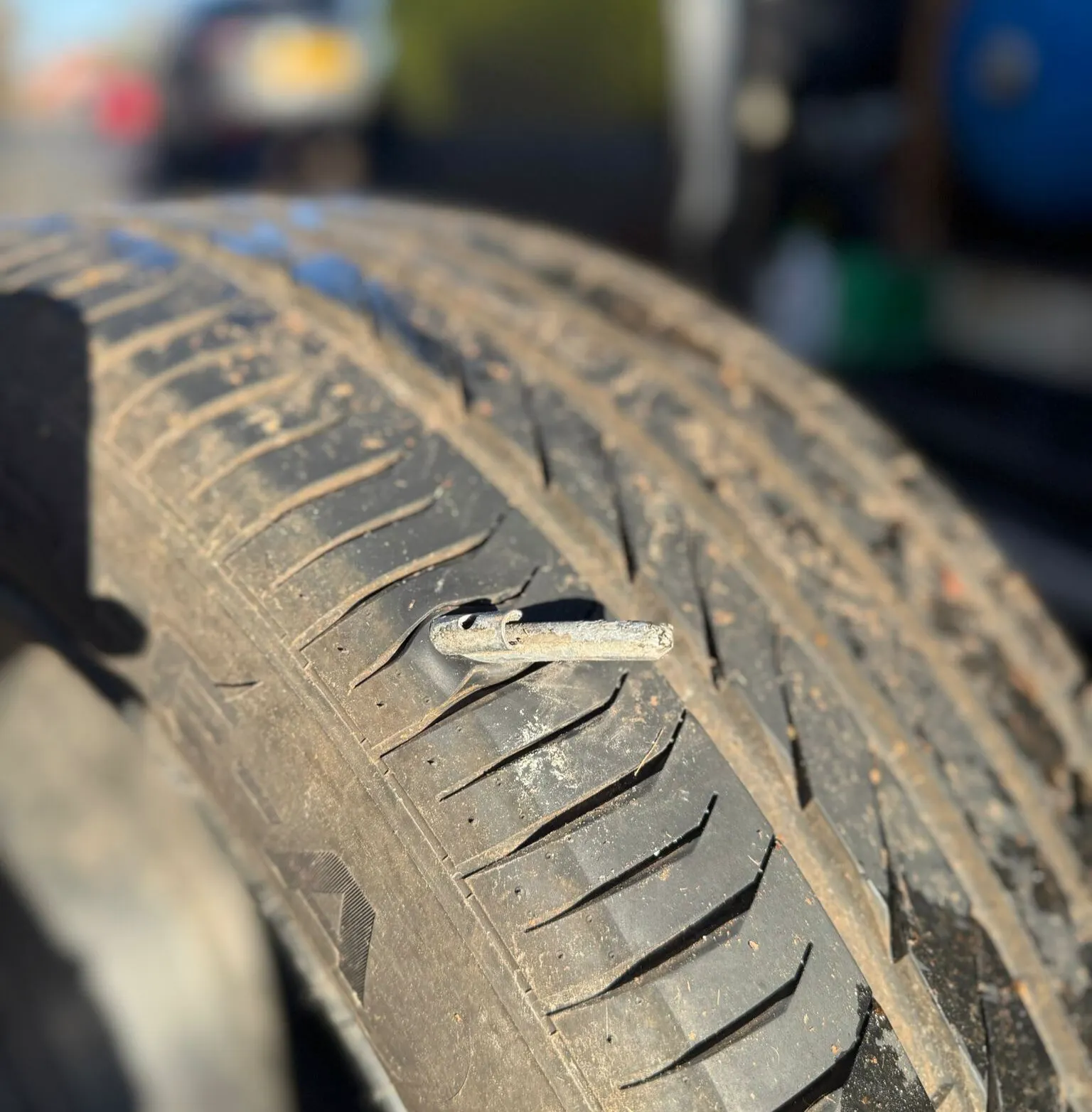
- A nail, screw or other object visible in the tread
What causes a slow puncture?
There are a handful of usual causes, and the cause decides the fix: a puncture repair, a new valve or a replacement tyre or wheel. A small nail or screw in the tread is the classic one, as it often stays in the hole and partly seals it.
Not every leak is a hole in the tread. TyreSafe points out that the valve is sometimes the culprit, and that potholes or kerbs can damage the sidewall or the wheel rim. Goodyear adds that air can escape where the tyre bead meets the rim if it is not sealing properly, or through hairline cracks in the wheel.
| Cause | Typical clue |
|---|---|
| Nail, screw or other sharp object | A metal head in the tread, with bubbles there in a soapy water test |
| Damaged or faulty valve | Bubbles at the valve, or a missing dust cap |
| Poor seal between tyre and rim | Bubbles around the rim edge, often on corroded or damaged wheels |
| Damaged or cracked wheel | A dent or crack after a pothole or kerb strike, though hairline cracks are hard to see |
| Damage to the tyre itself | Cuts, cracks or a bulge, which usually mean a new tyre |
How to check for a slow puncture
Check the pressures while the tyres are cold, before you set off, as the Highway Code notes that warm tyres can give a misleading reading. Compare each tyre with the figure in your handbook, which on many cars is also shown inside the fuel filler flap or on the driver's door sill. Top them all up, then check again the next day to see which one has dropped.
To find the leak, Goodyear suggests inflating the tyre, spraying or washing it with soapy water and watching for a cluster of bubbles where air is escaping. Work round the tread, the valve and the edge of the rim. If you find a nail or screw, leave it where it is.
- Use a reliable pressure gauge rather than judging by eye
- Recheck after 24 hours to see which tyre is losing air
- Look over the tread and sidewalls for nails, screws, cuts and bulges
- Leave any nail or screw in place for the fitter to see
Should you drive on a slow puncture?
The RAC's view is that driving on one is generally not recommended. The leak can speed up and leave you with a flat, and a soft tyre affects handling, stability and braking.
If you have to move the car, keep the trip short and gentle. TyreSafe says that in some cases you may be able to drive a short distance on a punctured tyre, but only at low speeds and only as far as you need to reach a garage or a safe place. Inflate the tyre to the correct pressure first and check it again when you arrive.
Do not drive on a tyre that is flat or going down fast. Goodyear warns that driving on a flat tyre can cause further damage, and a tyre that has been run flat is often beyond repair. If it will not hold air at all, stop somewhere safe and call for help.
Why the warning light is not enough
A tyre pressure monitoring system, or TPMS, warns you when pressure drops, and it has been compulsory on new passenger cars sold in the UK and the rest of the EU since November 2014. It is a useful safety net, but it only warns you once the pressure has already fallen.
TyreSafe is clear that TPMS should not replace regular manual checks with a gauge. A monthly check, or the weekly one the Highway Code suggests, can show a tyre that is slowly losing air before the light comes on.
If the light does come on, stop when it is safe and check all four tyres. TyreSafe says that in many cases the light resets once the correct pressure is restored, so if it comes back on a day or two later, the leak is still there.
What happens next
The fix depends on the cause. A nail or screw in the central part of the tread can often be repaired under the British Standard BS AU 159, while damage in the shoulder or sidewall means a new tyre. A faulty valve can be replaced, and a leak at the rim means checking the wheel as well as the tyre.
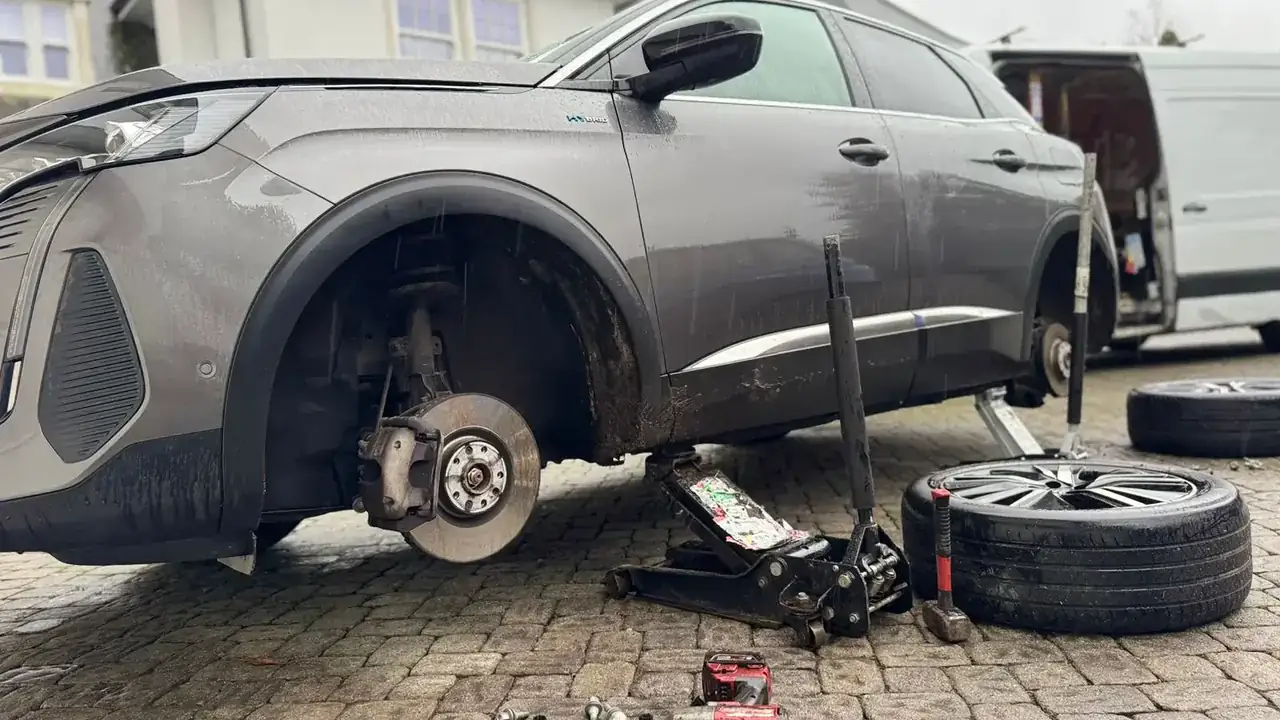
A permanent puncture repair can only be made with the tyre off the wheel, so it can be checked inside as well as out. Every call-out we attend includes a tyre inspection to decide whether a safe repair is possible or a replacement is needed, and you can call us on 07356 062568 24/7. If you have used sealant to get home, mention it when you call.
Related services
If a nail or screw in the central tread is causing the leak, our mobile tyre repair service can check it where the car is parked.
If the tyre has gone flat overnight or at the roadside, our emergency tyre assistance runs 24 hours a day.
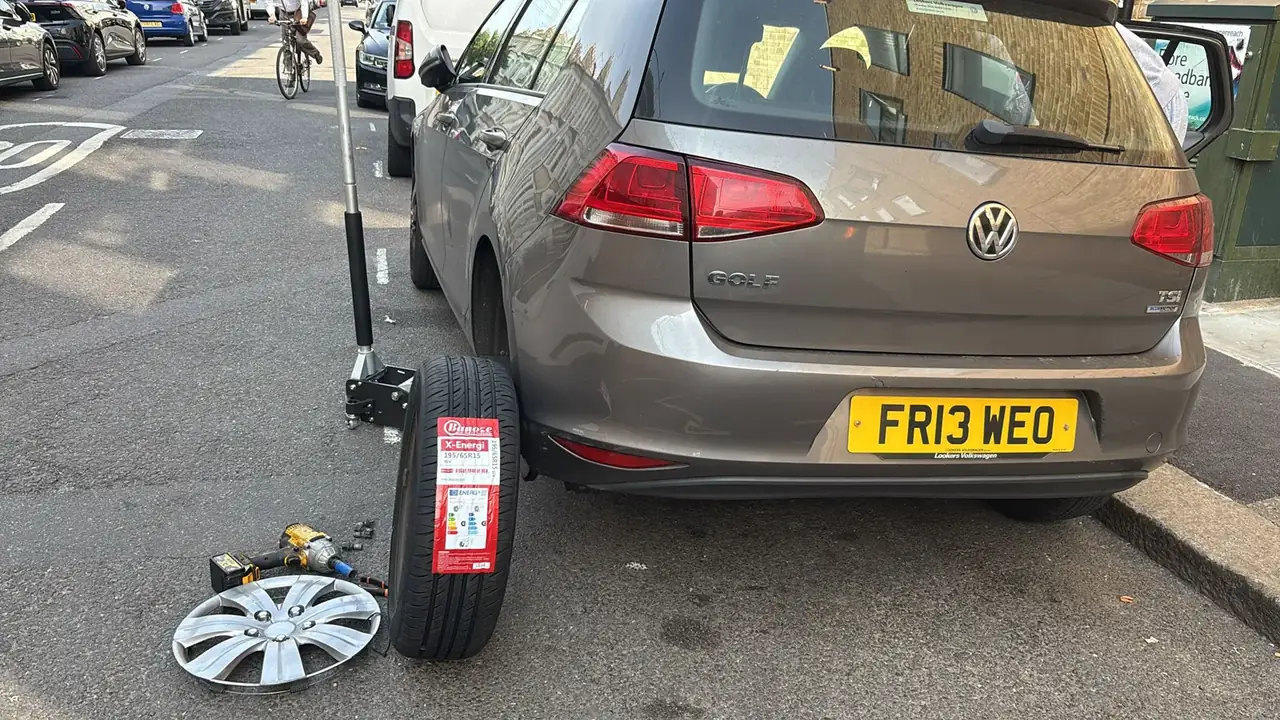
If the damage rules out a repair, our mobile tyre fitting service can replace the tyre at home or at work.
How long does a slow puncture take to go flat?
There is no fixed time. It depends on the cause and the size of the leak, and the RAC says it can take hours, days or even up to a week. Treat any tyre that keeps losing pressure as punctured and have it checked soon.
Why does my tyre pressure light keep coming back on?
If it returns a day or two after you top up, one tyre is probably losing air through a puncture, a faulty valve or a leak at the rim. Check each tyre with a gauge to find which one. If the light stays on when the pressures are correct, there may be a sensor fault.
Is it normal for tyres to lose some air?
Yes. Tyres lose a little air naturally over time, which is why regular checks matter. A leak is different: one tyre drops noticeably faster than the others and keeps needing air.
Can a faulty valve cause a slow puncture?
Yes. The RAC says a damaged valve can cause slow air leakage, and TyreSafe notes that air can escape if the valve cap does not seal properly or the dust cap is missing. Soapy water on the valve will bubble if it is leaking, and a damaged valve can be replaced without changing the tyre.
How often should I check my tyre pressures?
The Highway Code advises checking weekly, before a journey, while the tyres are cold. TyreSafe recommends at least once a month and before long journeys. Regular checks are the easiest way to catch a leak early.
Can I use tyre sealant on a slow puncture?
A sealant kit can get you to a fitter if the leak is a small puncture in the main tread, but TyreSafe describes repair kits as temporary measures only. Follow the kit's speed and distance limits, and tell the fitter it has been used, because the sealant must be cleaned out before the tyre can be inspected.