
Who looks after the road you were on
Every public road has a highway authority. It fixes potholes and handles damage claims.
GOV.UK has a Report a pothole tool. You enter the postcode of the road and it sends you to the right council in England or Wales. It also says to contact National Highways if the pothole is on a motorway or an A road they manage in England.
West Sussex County Council, for example, says National Highways looks after the A27, A23 and M23 in the county, so problems on those roads go to National Highways rather than the council.
How to report a pothole in Surrey, Kent, Sussex and Hampshire
Outside London, most roads are run by the county council. Medway, Brighton & Hove and Portsmouth are unitary councils, so they run their own roads. Each one has an online reporting page, listed in the sources at the end of this guide.
- Surrey County Council: use the Report it online page. Its pothole link opens the council's highway reporting system.
- Kent County Council: use the Report or track a problem on the road or pavement page. Kent says to report non-urgent potholes online and to phone if a problem may cause an accident.
- Medway Council: use the Report a pothole page. Medway says you must report the pothole before you make a claim for injury or damage.
- West Sussex County Council: use the Report a pothole online page, which lets you mark the spot on a map and add photos.
- East Sussex County Council: the council's contact page points to the East Sussex Highways report a problem form.
- Brighton & Hove City Council: use the Roads, pavements and potholes report damage form.
- Hampshire County Council: use the Report a pothole page. Hampshire asks drivers not to report the same issue more than once.
- Portsmouth City Council: use the Roads, potholes, street lights and street cleaning page, which links to the Report a pothole or problem with the road form.
Reporting a pothole in London
London has two kinds of highway authority. Transport for London (TfL) runs the red routes. The borough councils run most other local roads.
For a red route, TfL asks you to use its Streetcare service. TfL lists road defects such as potholes among the problems you can report there. The link is on TfL's Contact us about streets and road issues page.
For a borough road, report it to the borough council. If you are not sure which borough you are in, the GOV.UK Report a pothole tool or Find your local council tool will tell you from the postcode.
What to note when you report a pothole
Only stop where it is safe and legal to do so. The RAC warns that trespassing on a motorway is a criminal offence, so never go back onto one to photograph a pothole.
- The road name and the exact spot, such as the nearest house number, junction or lamp post
- The rough size and depth, and a photo if you can take one safely
- The date and time you hit it
- Which lane or side of the road it is on
How to claim for pothole damage
You make a claim to the highway authority that runs the road, not to the RAC, the AA or a garage. The RAC sets out the general process below. Councils have their own forms, so check the authority's website before you start.
A claim is not guaranteed to succeed. The RAC explains that councils cannot be held liable for a defect they are not aware of. Under section 58 of the Highways Act 1980, an authority may defend a claim if it can show it has a regular inspection and repair system in place.
The RAC says the general rule is that a pothole needs to be more than 40mm deep to support a claim, but this varies by location and by the shape of the defect.
- Report the pothole to the right authority, even if you do not plan to claim.
- Write down what happened, with the location, date and time, and keep any photos.
- Take the names and contact details of any witnesses.
- Get repair quotes and keep every invoice and receipt.
- Send your claim to the authority, explaining the damage and why you think it is responsible.
- If the authority sends a damage report form, return it with your invoices, a current MOT certificate and photos.
- If your claim is rejected, the RAC says you may be able to go to the small claims court, but advises getting legal advice first because you could face legal costs.
- If you have fully comprehensive insurance, the RAC says you may also be able to claim through your insurer.
Tyre and wheel damage to check after a pothole
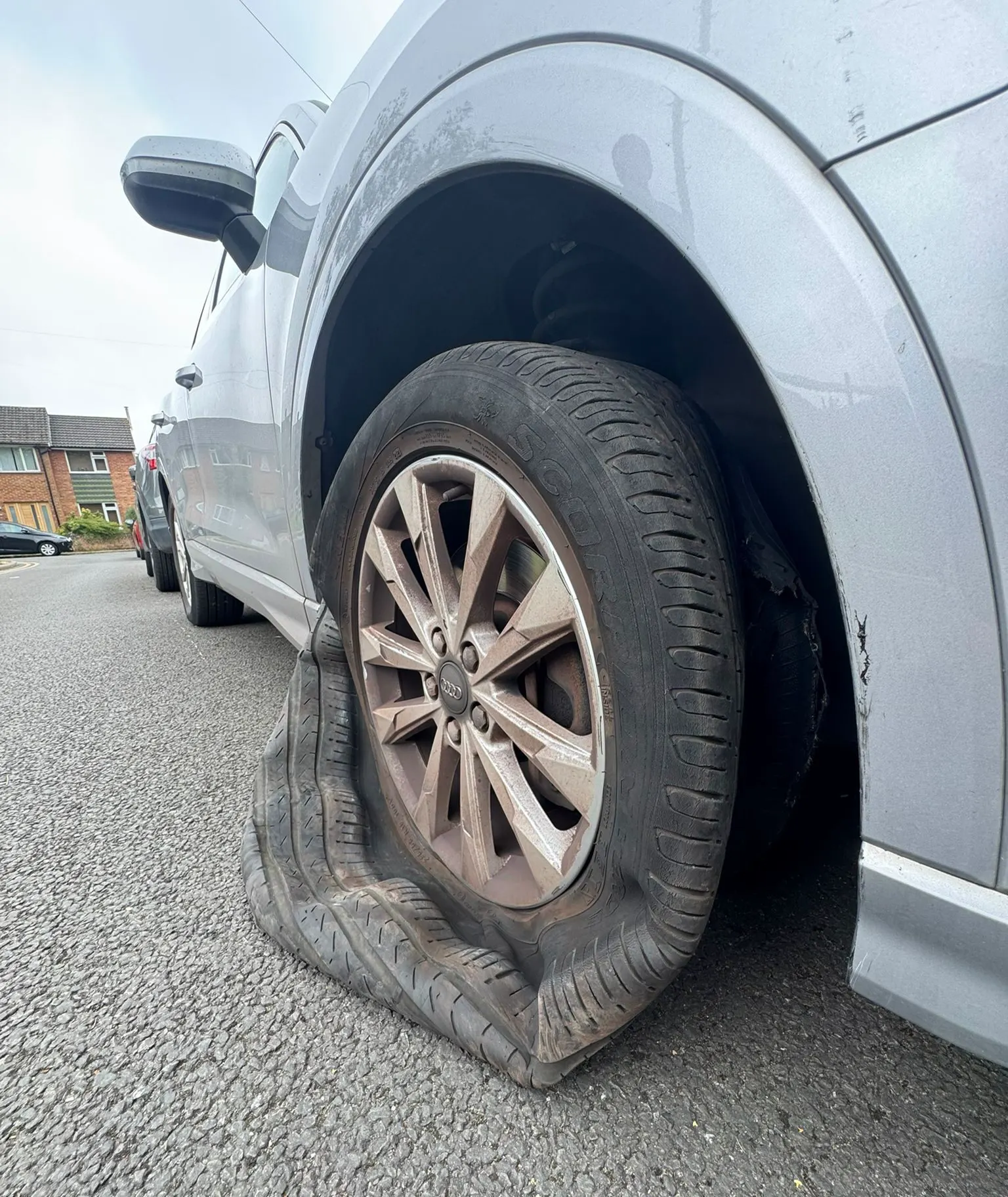
Damage from a pothole is not always obvious straight away. The RAC, citing its tyre partner ATS Euromaster, says an impact can cause buckled wheels, cracks, lumps in the tyre and cracked alloys, and can knock out the tracking and wheel balancing.
TyreSafe advises looking for cuts, bulges or tears in the sidewall, checking the pressure, and noting if the steering pulls to one side. Check again over the next few days, as some damage only shows later.
- Sidewall bulges: a lump or blister on the side of the tyre means the cords inside have broken. The AA warns this can lead to sudden tyre deflation. It cannot be repaired.
- Cuts and tears: look closely at the sidewall and the tread edge.
- Rim damage: check the wheel for dents, flat spots or cracks, especially on alloys.
- Pressure loss: a tyre that keeps losing air may have internal damage or a leak at the rim.
- Pulling: if the car drifts to one side, the alignment may be out.
- Vibration: a new shake through the steering wheel or seat can point to a bent wheel or balancing that has been knocked out.
Winter tyre checks: tread depth
The legal minimum tread depth for cars is 1.6mm across the central three quarters of the tread, around the whole tyre. The RAC says you could be fined up to £2,500 and get three penalty points for each illegal tyre.
Many experts advise more than the legal minimum in winter. The RAC says it is advisable to have 3mm of tread in winter to help with traction and grip. TyreSafe suggests considering replacement once the tread falls below 3mm.
Check all four tyres, including the inner edge, which is easy to miss.
Tyre pressures in cold weather
Cold air lowers tyre pressure. Continental says pressure drops by about 1 to 2 PSI for every 10°C fall in temperature, so a tyre set in autumn can be low on a frosty morning.
TyreSafe says to check pressures at least once a month and before a long journey, with the tyres cold, meaning the car has travelled less than 2 miles. Continental suggests checking at least every two weeks in winter, even if the car has a tyre pressure monitoring system.
Use the pressures in your handbook or on the label in the door frame or fuel filler flap. The RAC describes regular pressure checks as a line of defence against potholes.
All-season and winter tyres
TyreSafe says the rubber in normal tyres begins to harden below 7°C, giving less grip. It describes winter tyres as the safest option from October to March, when temperatures rarely rise above 7°C.
TyreSafe notes the main drawback of winter tyres is that they need changing and storing each year.
All-season tyres are the other option. TyreSafe says they give much better cold weather performance than summer tyres, though they are not ideal in extreme cold.
When to get help
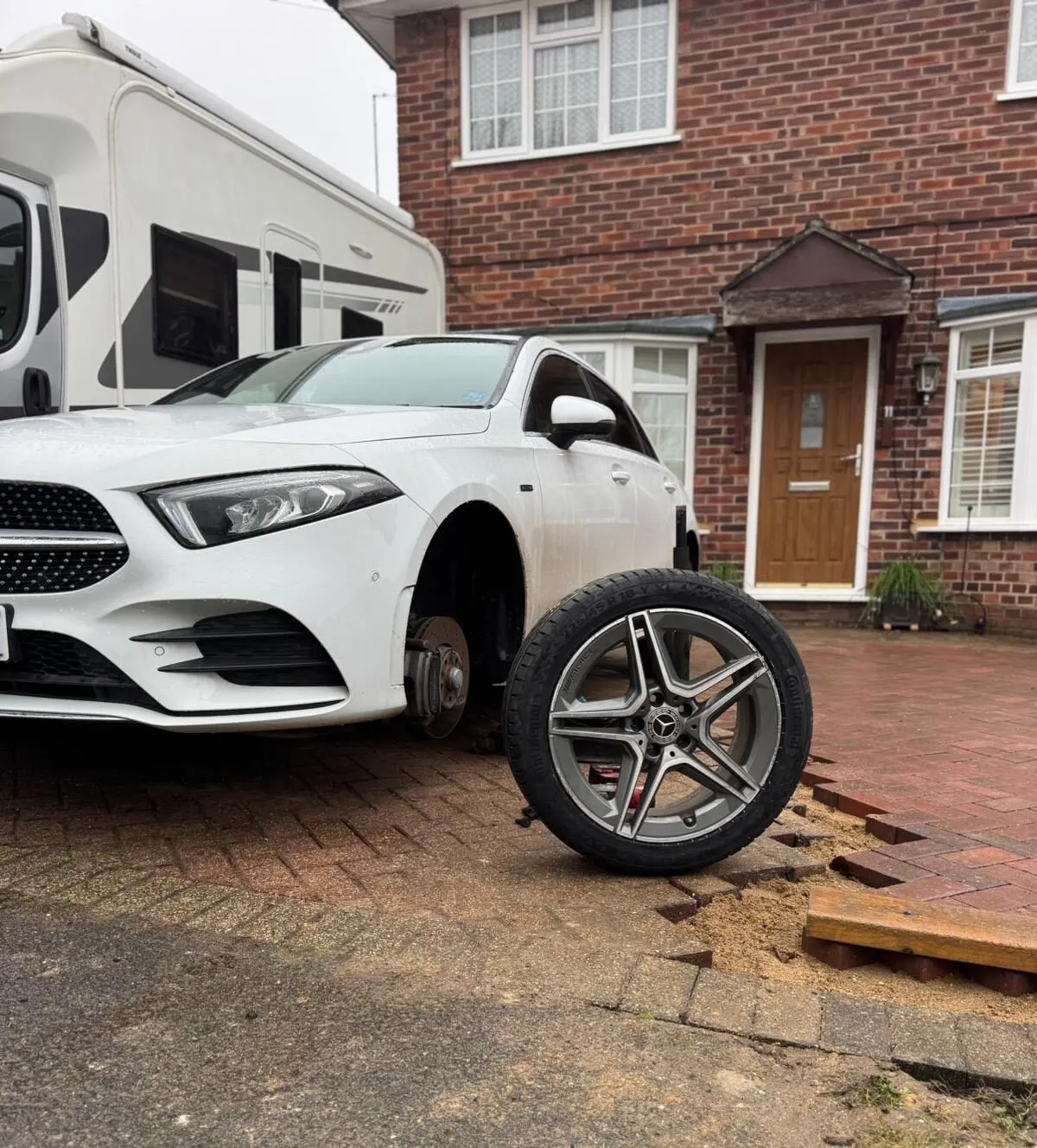
Stop driving on a tyre with a bulge, a deep cut, exposed cords or a fast loss of pressure. If the wheel is cracked or badly bent, leave it to be checked before you go any further.
If you are not sure, have the tyre looked at by a tyre specialist. A puncture repair is only possible in the central part of the tread, so sidewall damage means a new tyre.
If you are stuck with a damaged tyre in Surrey, London, Kent, Sussex or Hampshire, call us on 07356 062568. We come to you 24/7.
Related services
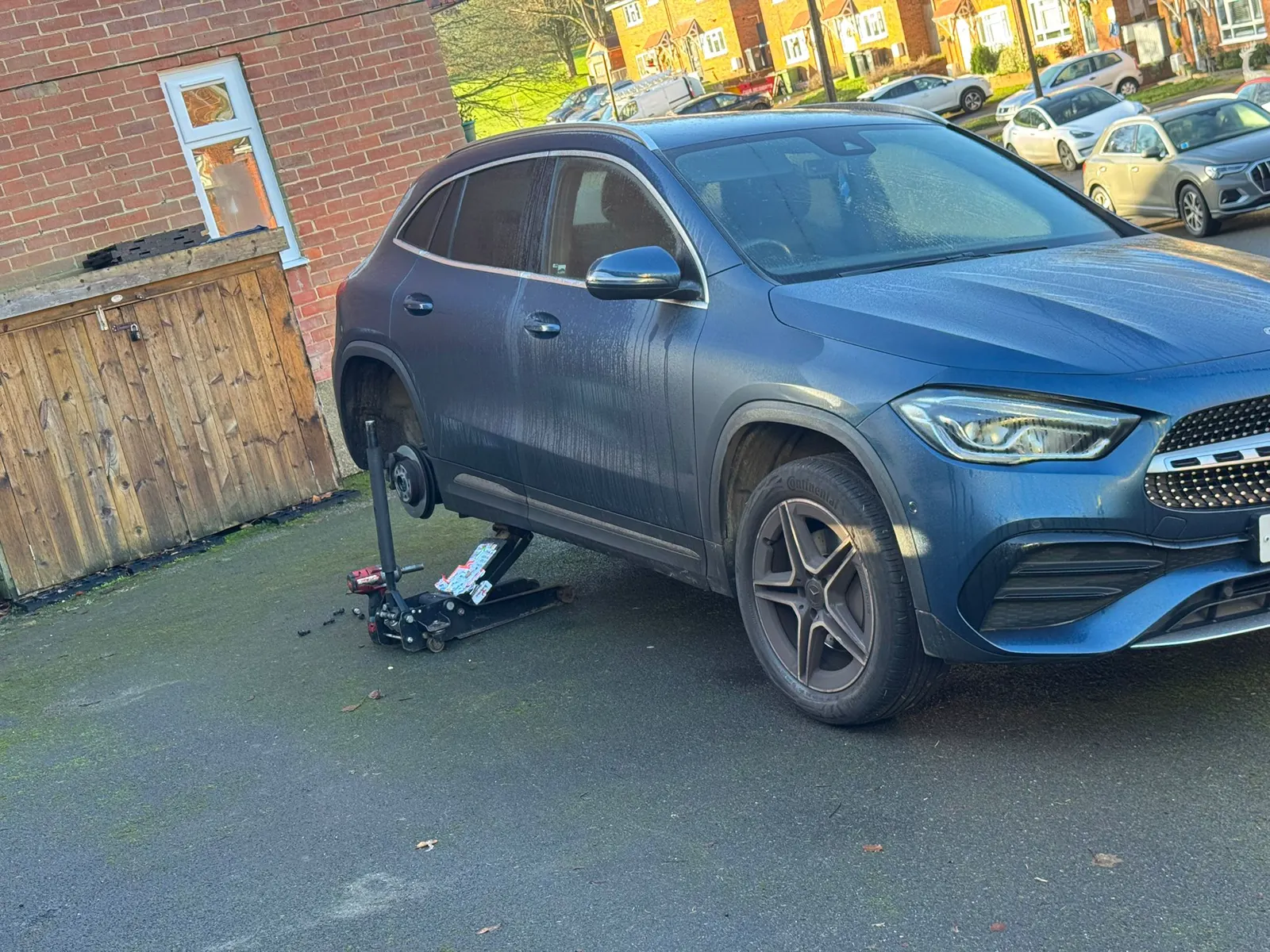
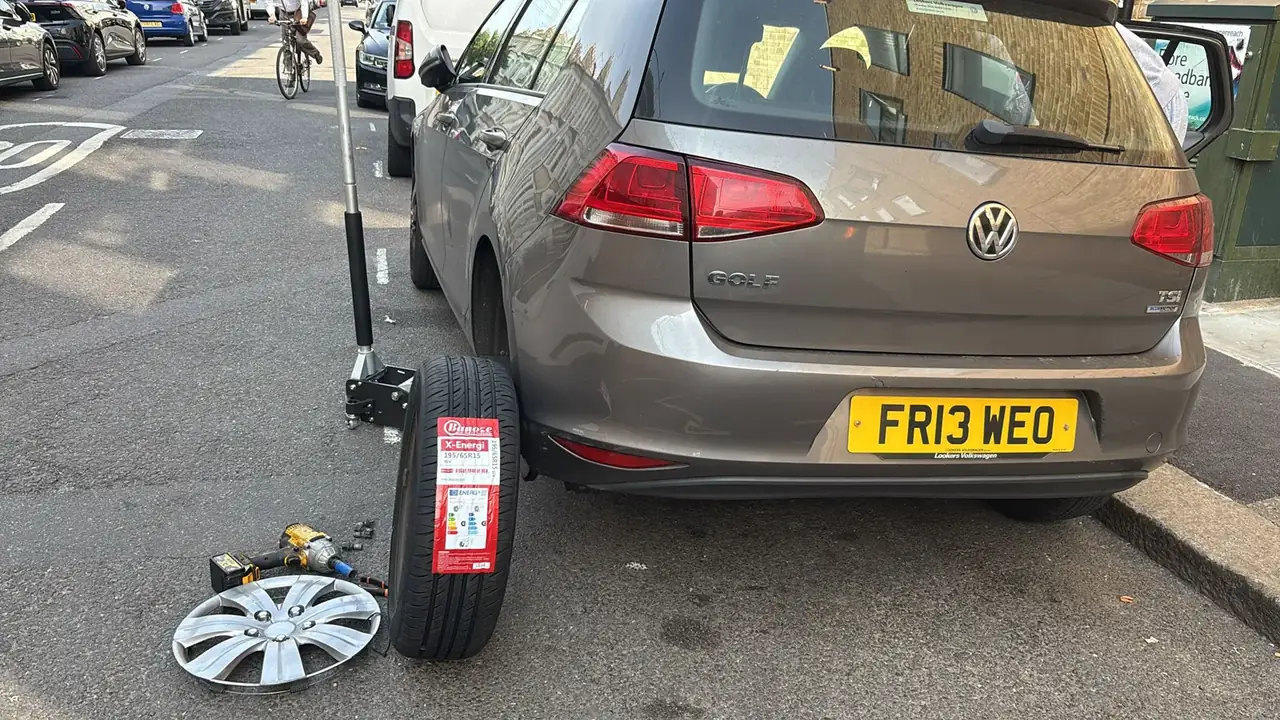
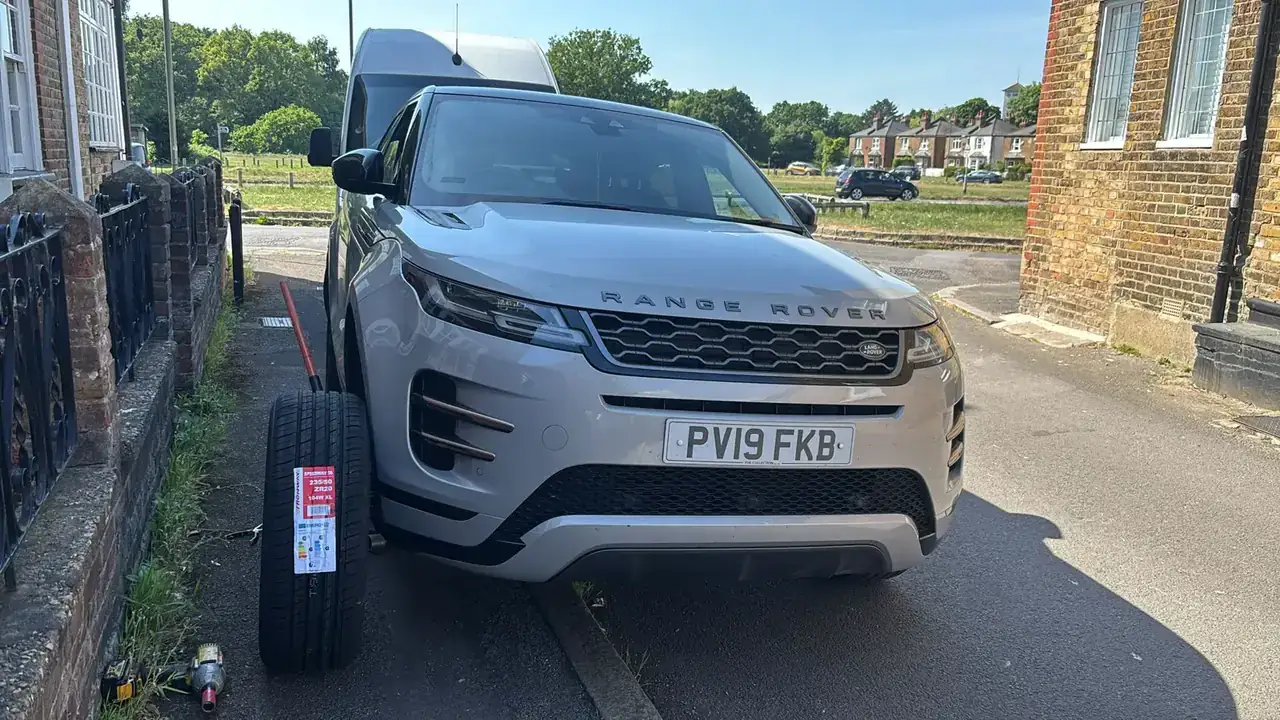
If a pothole has damaged a tyre beyond repair, our mobile tyre fitting service comes to you 24/7.
If a tyre fails at the roadside after a pothole, our emergency tyre assistance comes to you 24/7.
If you notice a new vibration after hitting a pothole, our wheel balancing service comes to you 24/7.
Who do I report a pothole to in London?
If it is on a red route, report it to Transport for London through Streetcare. For other local roads, report it to the borough council. The GOV.UK Report a pothole tool finds the right council from the road's postcode.
Can I claim for pothole damage to my tyre?
You can make a claim to the authority that runs the road, but success is not guaranteed. The RAC explains that an authority may refuse a claim under section 58 of the Highways Act 1980 if it shows it has a regular inspection and repair system. Keep photos, notes, repair invoices and any witness details.
How deep does a pothole have to be to claim?
The RAC says the general rule is more than 40mm, but this varies by location and by the shape of the defect. Check the guidance from the council that runs the road.
Is 3mm of tread legal for winter?
Yes. The legal minimum for cars is 1.6mm. The RAC advises having 3mm in winter for traction and grip, and TyreSafe suggests considering replacement below 3mm. These are recommendations, not the law.
Do I need winter tyres in Surrey or London?
No, winter tyres are not a legal requirement in the UK. TyreSafe says normal tyres lose grip as they harden below 7°C. Winter or all-season tyres are an option if you drive a lot in cold weather.