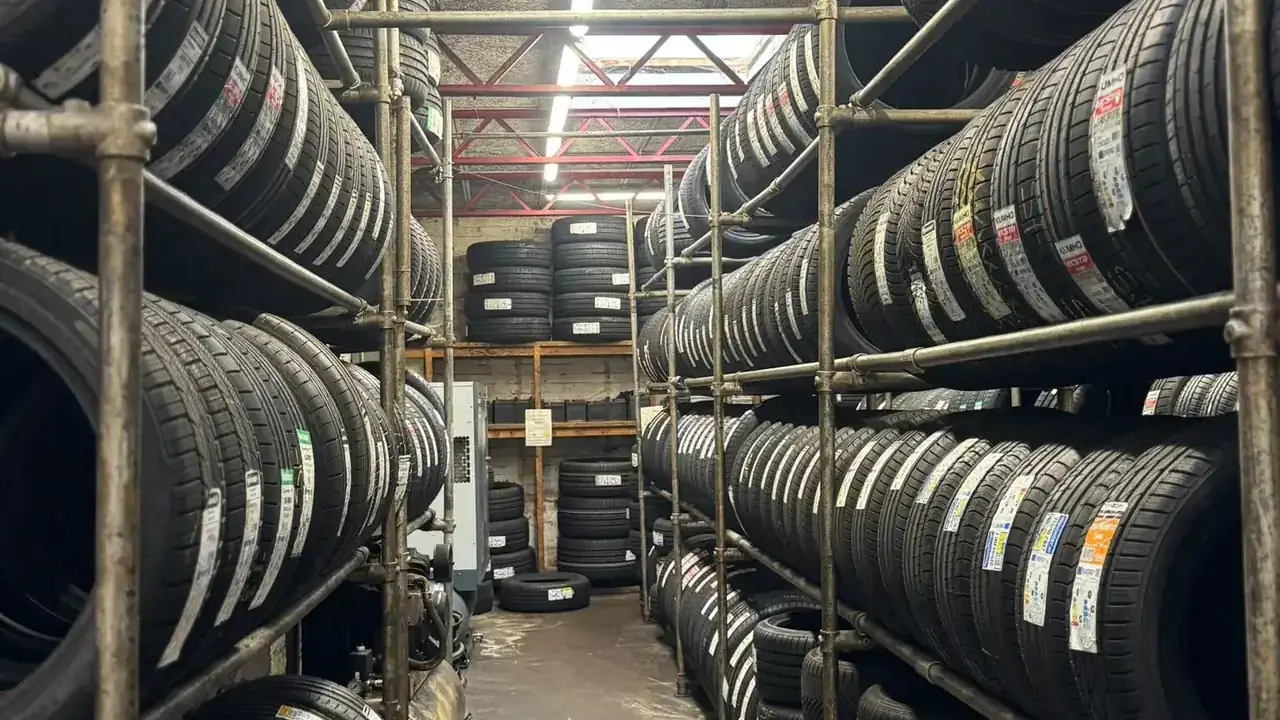

What are part-worn tyres?
Part-worn tyres are used tyres sold for further use, usually after being taken off another vehicle. They are sold by some tyre shops and online, and drivers often buy them to keep costs down.
Part-worn tyres are legal to buy and fit. The DVSA says it is not illegal to sell and fit part-worn tyres, but buyers must check the condition of any they buy. What can be sold is controlled by the Motor Vehicle Tyres (Safety) Regulations 1994, which Trading Standards enforce.
The rules apply to tyres supplied on their own. Under regulation 10, they do not apply to the tyres on a complete vehicle when the vehicle is sold, including its spare, so the tyres on a used car need checking separately.
The legal requirements for part-worn tyres
Regulation 7 of the 1994 Regulations sets out the conditions every part-worn tyre must meet before it is supplied. It is an offence to sell part-worn tyres that do not meet them.
The inflation test matters because some damage only shows under pressure. The tyre must not show any of the banned external defects when inflated to the highest pressure it is designed to run at, so a seller should inflate and inspect each tyre before sale.
The load index and speed rating should also suit your car, just as they would on a new tyre. Our guide to reading tyre sizes explains these markings.
| Requirement | What the law says |
|---|---|
| Cuts | No cut over 25mm or 10% of the section width, whichever is greater, measured in any direction on the outside and deep enough to reach the ply or cord |
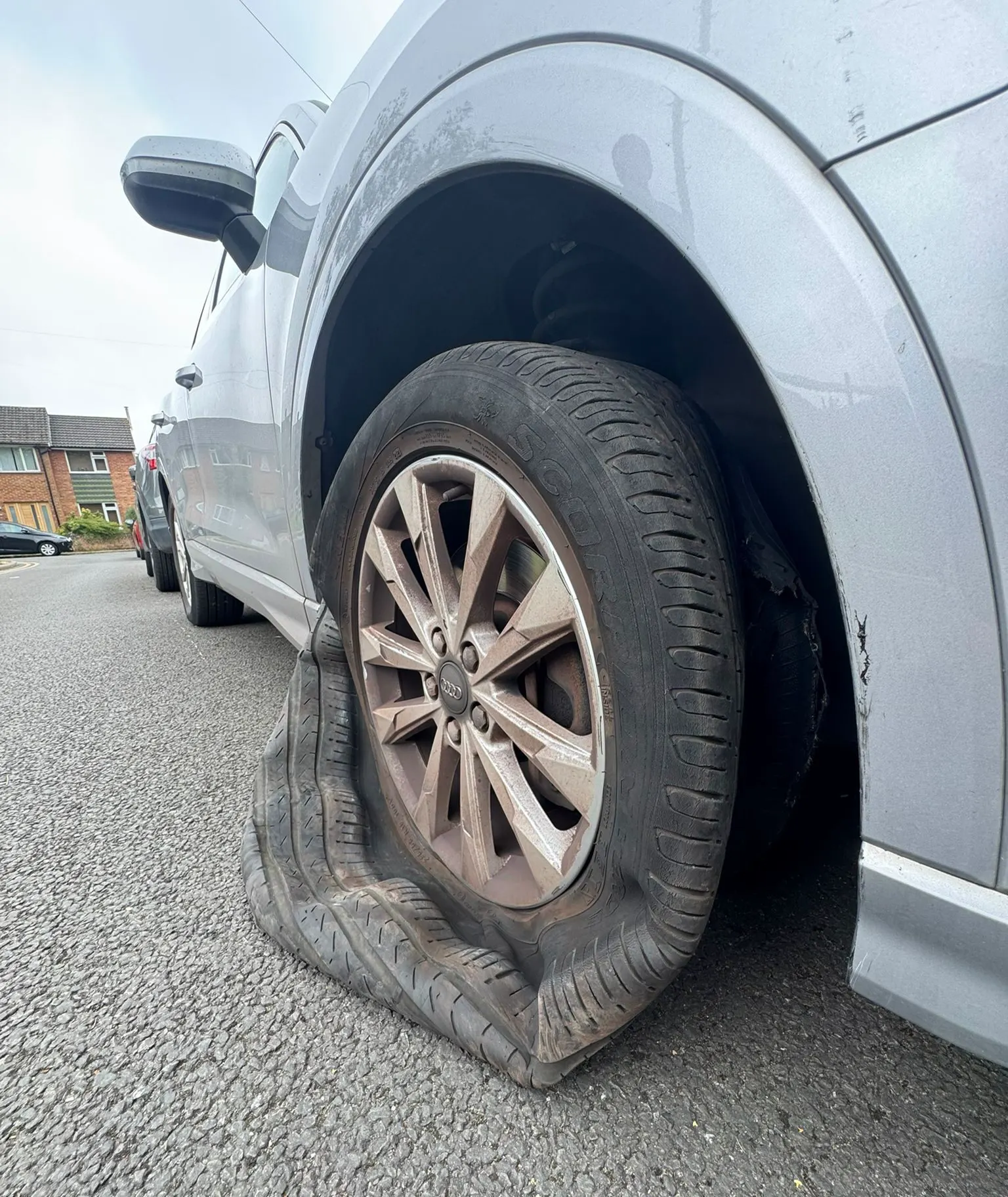
| Lumps and bulges | No lump, bulge or tear, inside or outside, caused by the structure separating or partly failing |
| Ply and cord | No ply or cord exposed, inside or outside |
| Inflation test | None of the external defects above showing when inflated to the highest pressure the tyre is designed for |
| Tread depth | At least 2mm across the full breadth of the tread and around the entire circumference, with the base of every original groove clearly visible |
| Approval marks | Except on retreads, the E approval mark, speed category symbol and load index moulded in when the tyre was made |
| PART-WORN mark | The word PART-WORN in capital letters at least 4mm high, next to every approval mark, applied permanently and legibly but not by hot branding or cutting into the tyre |
| Repairs | Any repair must have been done properly and meet British Standard BS AU 159, including its marking requirements |
| Retreads | A BS AU 144 retread mark applied at retreading, with the PART-WORN mark next to it |
Why 2mm of tread is a thin margin
The legal minimum for a car tyre on the road is 1.6mm, so a part-worn tyre sold with the minimum 2mm has only 0.4mm left before it becomes illegal. Our tread depth guide explains the 1.6mm rule and how to measure it.
TyreSafe says new tyres are normally sold with around 8mm of tread. A part-worn with little tread left will need replacing much sooner, and grip on wet roads falls as tread wears.
TyreSafe suggests judging value by how many millimetres of usable tread you are getting. If keeping costs down is the main reason you are looking at part-worns, compare them with a new economy tyre as well.
The risks of part-worn tyres
The biggest risk is that you do not know the tyre's history. It may have been run under-inflated, driven on while flat or hit a kerb hard, and some of that damage sits inside the tyre where you cannot see it. TyreSafe points out that part-worn tyres do not have to be X-rayed for internal structural defects before sale.
Official checks show the problems are real. In investigations described by the DVSA, 85% of the part-worn tyres bought were not correctly marked and so did not comply, and 11% were more than 10 years old. Defects found included a deep cut exposing cords, a sidewall bulge, a string plug repair and hard objects that had penetrated tyres.
Age is a blind spot. There is no legal age limit for part-worn car tyres, so an old tyre with good tread can still be sold if it meets the other conditions. Our guide to tyre age explains how to read the date code.
What to check before you buy a part-worn tyre
Inspect the tyre yourself, in good light, before it is fitted. If it is not marked as part-worn, or the seller cannot confirm it passed an inflation test, walk away.
Check the inside of the tyre too if you can, because the law bans lumps, bulges and exposed cords inside as well as outside. Marks or rubbing on the inner lining can show the tyre was driven while badly under-inflated.
- A permanent PART-WORN mark in letters at least 4mm high, next to each E approval mark
- The right size, load index and speed rating for your car, matching the tyre on the other side of the axle
- At least 2mm of tread at every point across the full width and all the way round, measured with a gauge
- No cuts, bulges, cracks or exposed cords on either sidewall
- A date code you are happy with, which may be on one sidewall only
- Any repair made from inside the tyre to BS AU 159, never a string plug pushed in from outside
Once the tyre is on your car
After fitting, a part-worn tyre is treated like any other tyre. The driver is responsible for keeping it legal, which means at least 1.6mm of tread, the correct pressure, and no large cuts, bulges or exposed cords.
Keep a closer eye on part-worns than you would on new tyres. Check the tread and pressures often, look over the sidewalls after any hard knock and plan to replace them early, given how little tread they may start with.
If you think a seller is supplying part-worn tyres that break the rules, report it to your local Trading Standards service, as the DVSA asks buyers to do. If you already have part-worns fitted and are unsure about them, every call-out we attend includes a tyre inspection, and you can reach us 24/7 on 07356 062568.
Related services
If you would rather fit new tyres, our mobile tyre fitting service brings premium, branded and economy options to your home or workplace.
If a tyre picks up a puncture later, our mobile tyre repair service checks it against BS AU 159 before repairing it.
Any replacement tyre should be balanced when it is fitted, and our wheel balancing service can help if a wheel starts to vibrate.
Are part-worn tyres legal in the UK?
Yes, as long as they meet the Motor Vehicle Tyres (Safety) Regulations 1994. It is an offence to sell a part-worn tyre that does not meet those rules, and once fitted, the tyre must also meet the normal legal requirements for tread, condition and pressure.
What is the minimum tread depth for a part-worn tyre?
At least 2mm across the full breadth of the tread and around the entire circumference. That is only 0.4mm above the 1.6mm legal limit for car tyres on the road, so a tyre sold at the minimum will need replacing soon.
How should a part-worn tyre be marked?
With the word PART-WORN in capital letters at least 4mm high, next to every E approval mark on the tyre, or next to the retread mark on a retreaded tyre. The marking must be permanent and legible, and it must not be hot branded or cut into the rubber.
Do the part-worn rules apply to tyres on a used car?
No. Regulation 10 of the 1994 Regulations exempts the tyres on a complete vehicle when the vehicle is sold, including the spare. The tyres must still be legal to drive on, so check the tread, sidewalls and date codes before you buy the car.
Is there an age limit on part-worn tyres?
There is no legal age limit for part-worn car tyres, but age still matters. In DVSA investigations, 11% of the part-worn tyres bought were more than 10 years old. Check the date code on the sidewall, and remember that tyre makers such as Michelin advise replacing tyres 10 years after manufacture.
Where do I report a seller of illegal part-worn tyres?
Report it to your local Trading Standards service, which enforces the rules on selling part-worn tyres. The DVSA also asks buyers to report suspected illegal supply to Trading Standards. Keep the receipt, photos of the tyre and its markings, and the seller's details.