
Where to find the date code on your tyres
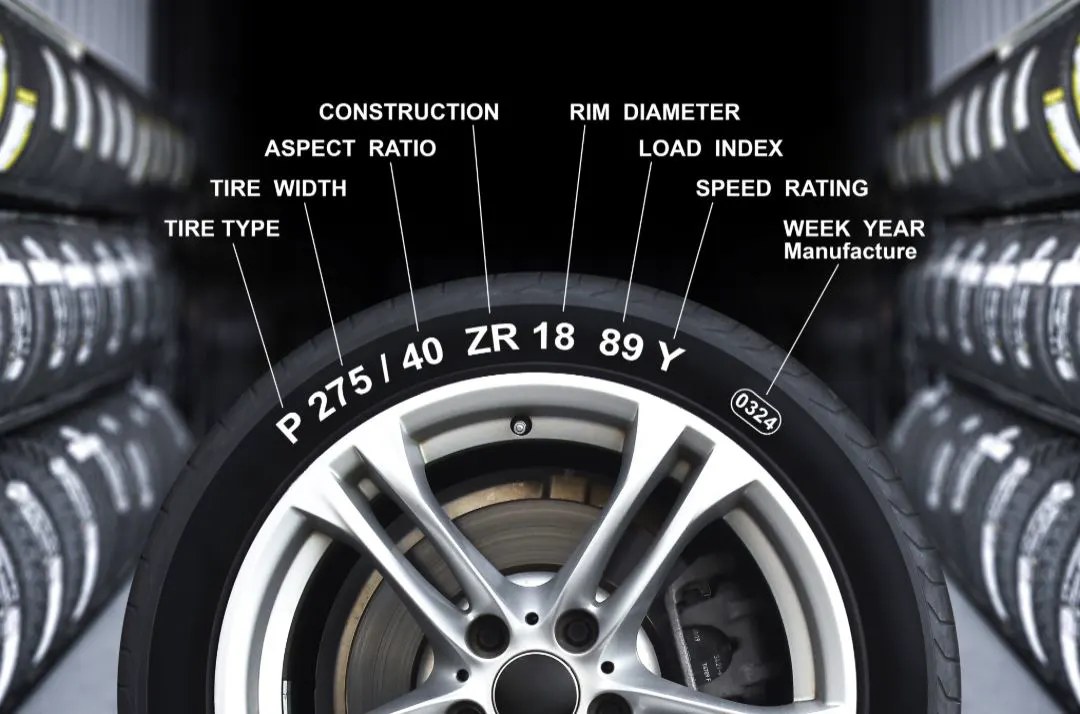
Tyres sold in Great Britain must have their date of manufacture marked on the sidewall. Look for the letters DOT followed by a string of letters and numbers. The date code is a group of four digits, often at the end of that string and usually inside a small oval or window.
The code only has to appear on one side of the tyre, so if you cannot find it, it is probably on the inner sidewall facing under the car. A torch and a damp cloth help, and turning the steering to full lock gives you a better view of the front tyres.
How to read the DOT date code
The first two digits are the week of manufacture and the last two are the year. A tyre marked 0819 was made in week 8 of 2019, and one marked 3522 was made in week 35 of 2022.
Tyres made before 2000 used a three-digit code, with the week followed by a single digit for the year. Continental notes that tyres from the 1990s usually have a small triangle after the code to set them apart from earlier decades. Either way, a three-digit code means the tyre is more than 25 years old.
Retreaded tyres can carry two date codes, the original one and the date of retreading. For a retread, the date of retreading is the one that counts.
| Date code | How to read it | What it tells you |
|---|---|---|
| 0819 | Week 8 of 2019 | More than five years old, so check its condition closely |
| 5214 | Week 52 of 2014 | More than 10 years old, past the age at which Michelin and Continental recommend replacing it |
| 178 followed by a small triangle | Week 17 of 1998 | Made before 2000 and far too old to use |
Is there a legal age limit for car tyres in the UK?
No. UK law sets no age limit for tyres on private cars, and the tyre age check in the MOT in Great Britain only applies to vehicles with more than 8 passenger seats. A car will not fail its MOT purely because a tyre is old.
That does not make every old tyre legal. Car tyres must still meet the condition rules in regulation 27 of the Construction and Use Regulations, which ban large cuts, bulges, exposed cords and tyres not kept in a condition fit for use, as well as tread below 1.6mm. Our tread depth guide covers that limit in detail.
Age does its damage quietly, through cracking and through weakness inside the tyre that you cannot always see. That is why tyre makers publish their own advice on when to replace old tyres.
The 10-year rule for lorries, buses, coaches and minibuses
Since 1 February 2021, the law in England, Scotland and Wales has banned tyres more than 10 years old from certain positions on heavy vehicles and minibuses. On these vehicles, an over-age tyre in a restricted position is a dangerous defect at the annual test, and the date code must be legible. For a retread, the age runs from the date of retreading.
Older tyres on other axles are lawful, but government guidance says they are not recommended, noting that research found structural deterioration can occur in older tyres which cannot be identified through visual inspection. Vehicles of historical interest that are not used commercially are exempt. The positions covered by the ban are:
- The front steered axles of goods vehicles over 3.5 tonnes maximum gross weight, such as lorries
- The front steered axles of buses and coaches
- Any tyre on a minibus with 9 to 16 passenger seats that is fitted singly, which covers the front wheels and any rear axle without twin wheels
How often should you replace tyres?
There is no fixed interval. A tyre needs replacing when the tread is worn, when it is damaged or when it has aged too much, whichever comes first. For many drivers the tread wears out first, but on low-mileage cars, spares and cars that sit unused, age can catch up first.
Michelin advises having tyres checked by a professional at least once a year after five years of use, and replacing them 10 years after the date of manufacture as a precaution, including spares. Continental says all tyres, including spares, that are more than 10 years old should be removed from service and replaced.
Some vehicle manufacturers recommend a different age for replacement, so check your handbook and follow it. As a rule of thumb, start looking closely from about five years, as TyreSafe says most tyres begin to show signs of ageing after around five to six years.
Signs of ageing: cracking and perishing
Rubber breaks down over time. Look for fine cracks in the sidewall and at the base of the tread grooves, often described as crazing or perishing, especially on tyres that spend a lot of time in strong sun.
TyreSafe says a tyre needs replacing when cracks appear on the sidewall, when they are deep (more than about 1 to 2mm) or when they run all the way around the tyre. Its advice is that the safest option is to replace a tyre as soon as cracks appear.
Sunlight, temperature swings and running at the wrong pressure all encourage cracking, and TyreSafe recommends cleaning tyres regularly so dirt and oil do not break the rubber down. If you store wheels, Michelin suggests a clean, airy, temperate place away from direct sunlight.
- Fine cracks in the sidewall or between the tread blocks
- A bulge, vibration or a tyre that keeps losing pressure
- A date code more than 10 years old, or a three-digit code
Spare wheels, used cars and part-worn tyres
A full-size spare that has sat under the boot floor for years may look new and still be too old to rely on. Michelin's and Continental's age advice applies to spares too, so check the date code before you need it.
When buying a used car, read the date codes on all the tyres, including the spare. Tyres that are well over five years old, or a set with very different dates, are worth raising with the seller.
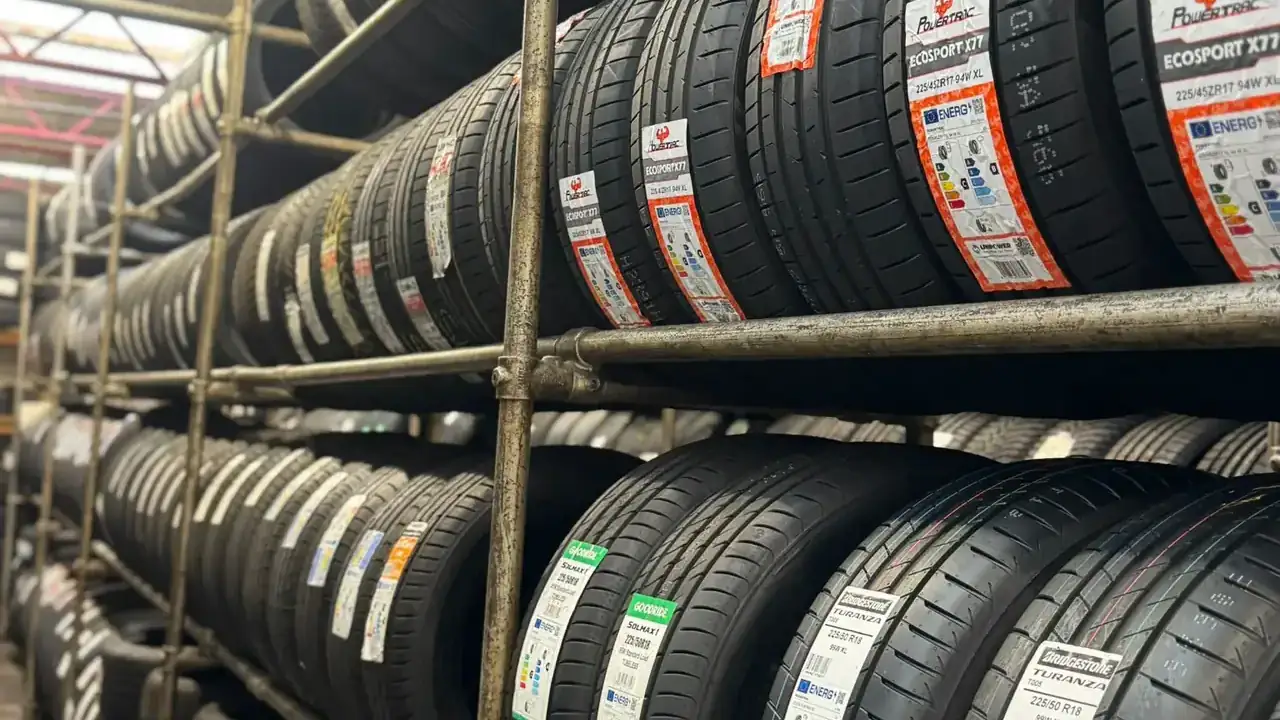
Part-worn tyres need extra care, because their history is unknown and there is no legal age limit on part-worn car tyres. Our guide to part-worn tyres and the law explains what to check.
If you are unsure about the age or condition of your tyres, ask for them to be checked. Every call-out we attend includes a tyre inspection, and you can reach us 24/7 on 07356 062568.
Related services
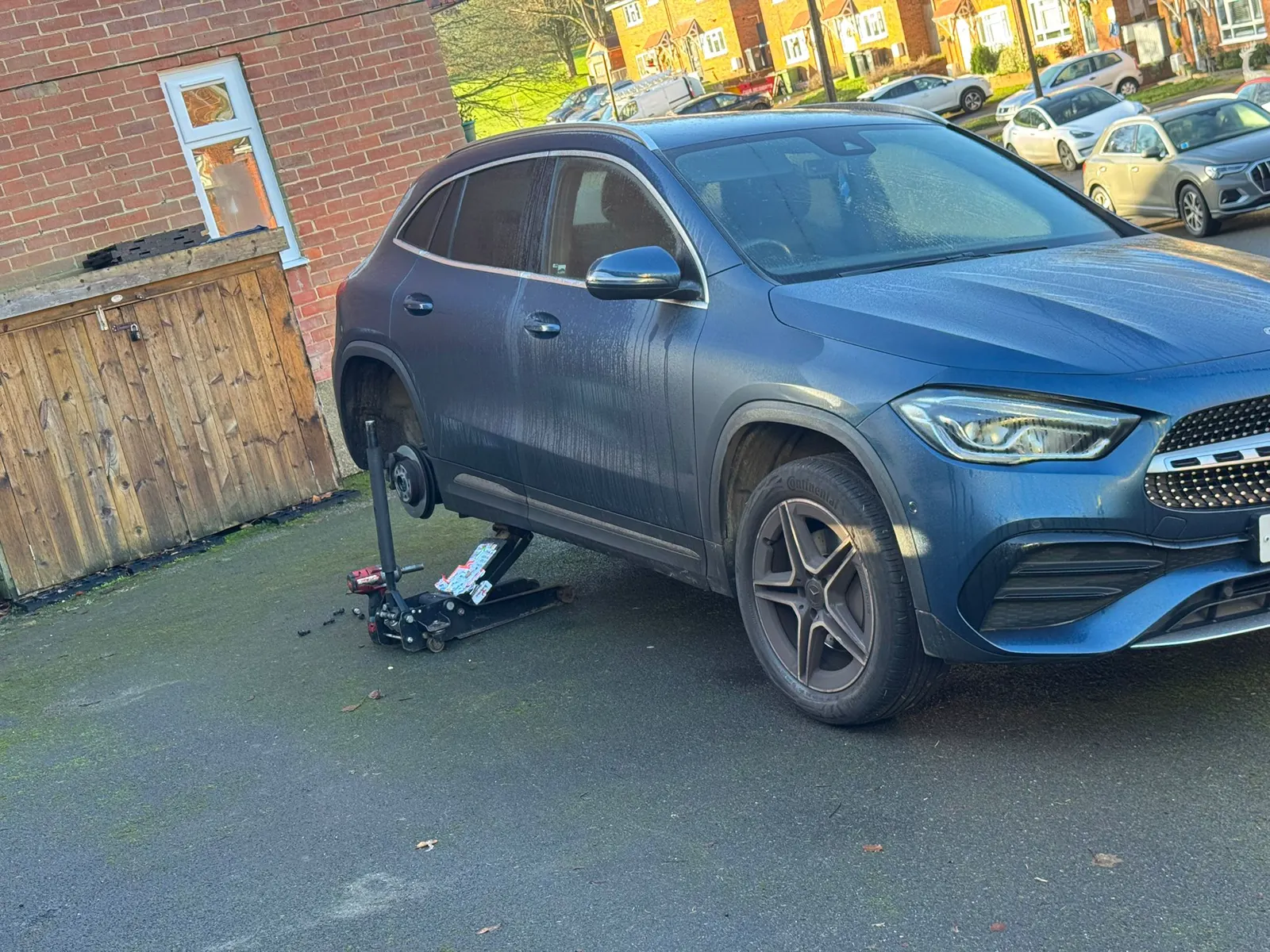
If your tyres are too old or showing cracks, our mobile tyre fitting service can replace them at home or at work.
A mobile tyre fitter can check the date codes on every tyre, including the spare, while inspecting your car.
Wheel rotation helps a set of tyres wear evenly, although it cannot stop the rubber ageing.
Is there a legal age limit for car tyres in the UK?
No. There is no legal age limit for tyres on private cars, and the MOT tyre age check in Great Britain only applies to vehicles with more than 8 passenger seats. Car tyres must still meet the legal rules on tread depth, cuts, bulges and exposed cords, whatever their age.
What does a three-digit date code mean?
It means the tyre was made before 2000, when date codes used three digits: two for the week and one for the year. A tyre with a three-digit code is more than 25 years old and should be replaced, however much tread it has left.
Should I replace a 10-year-old tyre that still has plenty of tread?
Yes, that is the advice from major tyre makers. Michelin recommends replacing tyres 10 years after manufacture as a precaution, and Continental says tyres more than 10 years old, including spares, should be removed from service. Ageing can weaken a tyre in ways you cannot see.
Does the 10-year tyre rule apply to vans?
Not to most vans. The rule covers the front steered axles of goods vehicles over 3.5 tonnes maximum gross weight, along with buses, coaches and minibuses. A typical van at or under 3.5 tonnes is not covered, although its tyres must still meet all the other legal requirements.
Do spare tyres need replacing because of age?
They can. A spare ages even if it has never been used, and Michelin and Continental both apply their 10-year advice to spare tyres. Check the date code on your spare along with its pressure, so you know it is fit to use before you need it.
Which date counts on a retreaded tyre?
The date of retreading. Government guidance on the 10-year rule says a retread's age is taken from when it was retreaded rather than when the original tyre was made. Retreads can carry two codes, so use the more recent one.