
Mobile TyreFitting Today
Open 24/7 07356 062568
How to Read Tyre Size Markings on Your Car
  1. Home
  2. Tyre Advice
  3. How to Read Tyre Size Markings on Your Car

Open now · 24 hours, 7 days

How to Read Tyre Size Markings on Your Car

Practical advice from 24/7 mobile tyre fitters in Surrey and South London.

  • RAC Accredited Repairer
  • 30 minTypical response
  • 24/7Every day of the year
  • 10,000+Tyres in stock
  • 5+ yrsOn the road

Quick answer: To read tyre size, look at the sidewall code such as 205/55 R16 91V. 205 is the width in millimetres, 55 is the sidewall height as a percentage of width, R means radial, 16 is the rim diameter in inches, 91 is the load index and V is the speed rating.

Where to find your tyre size

The quickest place to check is the sidewall of the tyre itself. The size is moulded into the rubber in raised characters, usually in a line that starts with three digits, a slash and two more digits.

If the sidewall is dirty, worn or hard to read in the dark, there are other places to look. Many cars have a sticker on the driver's door jamb or inside the fuel filler flap that lists the approved tyre sizes and pressures. Your vehicle handbook will also list the sizes the manufacturer approves for your model.

It is worth checking the tyre on the car as well as the sticker. A previous owner may have fitted a different approved size, for example after changing the wheels, and you want to match what is actually fitted unless you plan to change all of them.

  • Tyre sidewall: the most direct source, read it on the tyre you need to replace
  • Door jamb or fuel flap sticker: lists approved sizes and pressures on many cars
  • Vehicle handbook: lists every size approved for your model and trim
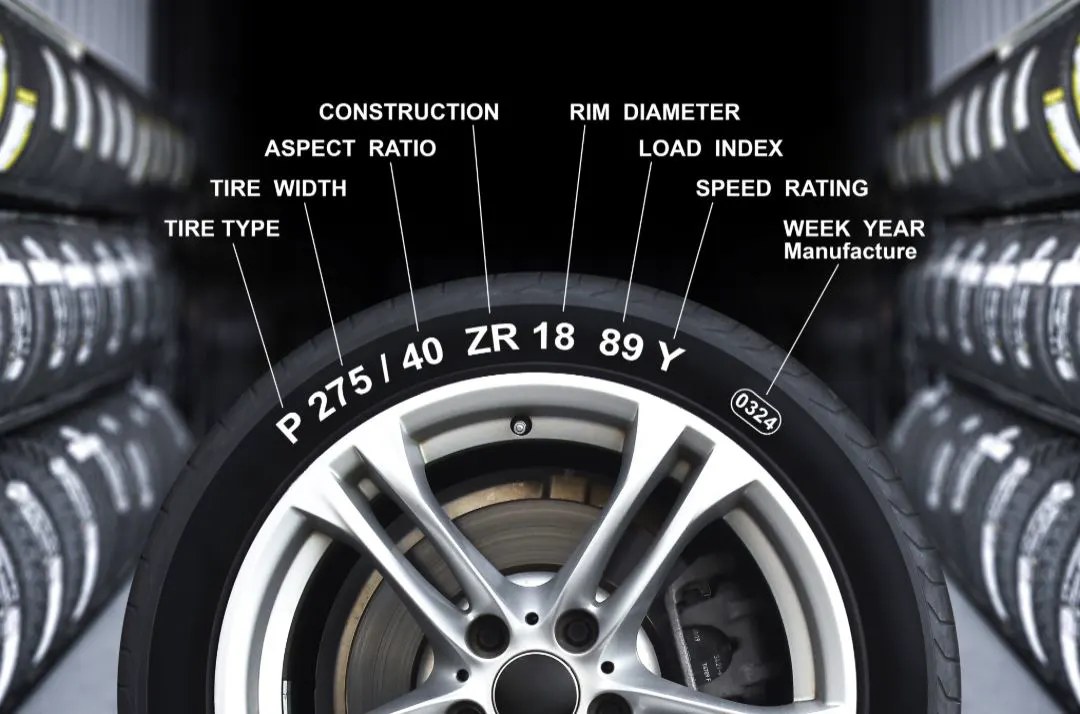
How to read tyre size: 205/55 R16 91V broken down

Learning how to read tyre size is easier once you see each part of the code on its own. Take 205/55 R16 91V, one of the most common sizes on UK family hatchbacks.

The first two numbers describe the shape of the tyre. The letter and the next number describe its construction and the wheel it fits. The final number and letter, together called the service description, tell you how much weight the tyre can carry and how fast it is rated to go.

  • 205: the tyre's width in millimetres, measured from sidewall to sidewall
  • 55: the aspect ratio, meaning the sidewall height is 55% of the width
  • R: radial construction, which covers almost every modern car tyre
  • 16: the rim diameter in inches, so this tyre fits a 16 inch wheel
  • 91: the load index, a code for the maximum load per tyre
  • V: the speed rating, a code for the maximum sustained speed the tyre is rated for

What the load index means

The load index is a number that refers to a standard chart. It does not tell you the weight directly. For example, a load index of 91 means the tyre can carry up to 615kg when inflated correctly, while a higher number means a higher load capacity.

Replacement tyres should have a load index at least as high as the one the manufacturer specifies for your car. Fitting a lower load index than specified is not something we would recommend, and it can matter for insurance and roadworthiness.

Some tyres also carry the letters XL or Reinforced. These are built to carry a higher load at a higher pressure than a standard tyre of the same size. If your car came on XL tyres, it is sensible to replace them with XL tyres. If you are not sure, check your handbook or call us with your tyre size and we will confirm.

What the speed rating means

The speed rating letter shows the maximum speed the tyre can sustain when carrying its rated load at the correct pressure. It is a test rating, not a suggestion about how fast to drive, and UK speed limits still apply.

Your replacement tyres should normally match or exceed the speed rating listed for your car. The common ratings you will see on UK cars are listed below.

  • T: up to 118mph (190km/h)
  • H: up to 130mph (210km/h)
  • V: up to 149mph (240km/h)
  • W: up to 168mph (270km/h)
  • Y: up to 186mph (300km/h)

How to read the DOT date code

Somewhere on the sidewall you will find the letters DOT followed by a string of letters and numbers. The last four digits, often inside an oval outline, tell you when the tyre was made.

The first two of those digits are the week of manufacture and the last two are the year. So a code ending 2423 means the tyre was made in week 24 of 2023. The date code may only be printed on one side of the tyre, so if you cannot see it, check the inner sidewall.

Rubber ages over time even when a tyre has plenty of tread, so the date code is a useful check on spare wheels, cars that sit unused and second-hand tyres. If a tyre shows cracking in the sidewall or tread, have it inspected regardless of its age.

Other sidewall markings worth knowing

Besides the size and date, the sidewall can tell you a few more useful things. These markings help you choose the right replacement and avoid mixing tyres that should not be mixed.

  • Run-flat markings: manufacturers use their own symbols or letters such as RFT, ROF, SSR or ZP. Run-flats should usually be replaced with run-flats
  • M+S or a three-peak mountain snowflake symbol: shows a tyre designed for mud and snow or winter conditions
  • Rotation arrow: directional tyres must be fitted so they turn the way the arrow points
  • Outside or Inside: asymmetric tyres must be fitted with the correct face outwards
  • Maximum pressure: the most the tyre can hold, which is not the pressure you should run. Use the figure from the door sticker or handbook

Common mistakes when ordering tyres

The most common mistake is reading the size from the wrong tyre. Some cars, particularly performance models, use a different size on the front and rear axles, so check the tyre that actually needs replacing.

The second is ignoring the load index and speed rating. Two tyres can share the 205/55 R16 size and still have different service descriptions. Matching the full code, including any XL or run-flat marking, avoids a wasted trip and gets you a tyre that suits the car.

A photo of the sidewall on your phone is often the easiest way to get it right. Take one in good light, including the size line and any letters next to it.

How Mobile Tyre Fitting Today can help

If you have checked your tyre size and need a replacement, call us on 07356 062568. We work 24/7 and our fully equipped vans carry tools and tyres, with more than 10,000 tyres in stock across premium, branded and economy options.

Tell us the full size code, or send a photo of the sidewall on WhatsApp to the same number, and we will confirm a suitable tyre before we set off. We come to your home, workplace or roadside, and we reach most locations within 30 minutes across Surrey, south and south-west London and West Sussex.

Related services

Once you know your size, our mobile tyre fitting service can bring the right tyre to your driveway or workplace.

Some cars wear their front tyres faster, and regular wheel rotation helps the whole set last longer.

If you need a tyre today and are unsure of the size, our same-day mobile tyre fitter can check it for you on arrival.

Questions drivers ask

Still unsure? Call 07356 062568 any time, day or night.

07356 062568

What does 205/55 R16 mean on a tyre?

205 is the width of the tyre in millimetres. 55 is the aspect ratio, so the sidewall height is 55% of the width. R means the tyre has radial construction, and 16 is the diameter of the wheel rim it fits, in inches. The numbers and letter that follow are the load index and speed rating.

Can I fit a different tyre size to my car?

Only sizes approved for your vehicle should be fitted. Your handbook lists them, and the door jamb or fuel flap sticker often does too. A different size can affect the speedometer, handling and clearance in the wheel arch. If you are unsure, call us with your tyre size and we will confirm what suits your car.

Does the speed rating need to match exactly?

Replacement tyres should normally match or exceed the speed rating your car's manufacturer specifies. A higher rating is generally fine. A lower rating than specified is not something we would recommend. Check your handbook for the required rating, or call us with your tyre size and we will confirm.

How do I tell how old my tyres are?

Find the DOT code on the sidewall and look at the last four digits. The first two are the week of manufacture and the last two are the year, so 0822 means week 8 of 2022. If you cannot see it, the code may be printed on the inner sidewall only.

Is the pressure on the sidewall the one I should use?

No. The figure on the sidewall is the maximum pressure the tyre can hold. The correct running pressure for your car is set by the vehicle manufacturer and is shown in the handbook and often on a sticker in the driver's door jamb or fuel filler flap. It may differ for front and rear and for heavy loads.

Need a tyre fitted now?

07356 062568

Our mobile tyre fitters come to your home, workplace or roadside across Surrey, South London and West Sussex, 24 hours a day.

Call nowWhatsApp