
Mobile TyreFitting Today
Open 24/7 07356 062568
Wheel Balancing vs Alignment: What's the Difference?
  1. Home
  2. Tyre Advice
  3. Wheel Balancing vs Alignment: What's the Difference?

Open now · 24 hours, 7 days

Wheel Balancing vs Alignment: What's the Difference?

Practical advice from 24/7 mobile tyre fitters in Surrey and South London.

  • RAC Accredited Repairer
  • 30 minTypical response
  • 24/7Every day of the year
  • 10,000+Tyres in stock
  • 5+ yrsOn the road

Quick answer: Wheel balancing corrects uneven weight around a wheel and tyre so it spins smoothly, and it fixes vibration felt through the steering or seat. Wheel alignment adjusts the angles of the wheels relative to the car and the road, and it fixes pulling to one side, an off-centre steering wheel and edge wear.

Wheel balancing vs alignment in a sentence

People often mix these up because both affect how the car drives and how the tyres wear. The difference is simple once you see it: balancing is about weight, alignment is about angles.

Balancing makes sure each wheel and tyre spins evenly without wobbling. Alignment, sometimes called tracking, makes sure the wheels point in the right direction and sit at the right angle to the road. A car can need one, the other, or both.

Knowing which is which helps you describe the problem when you book. It also saves paying for the wrong job, because balancing will not stop a car pulling and alignment will not stop a wheel vibrating.
What wheel balancing does

No tyre and wheel is perfectly even. Small differences in weight around the assembly cause it to wobble or hop as it spins, and at speed that becomes a vibration you can feel.

Balancing uses a machine to spin the wheel, find the heavy and light spots, and correct them with small weights fixed to the rim. The result is a wheel that turns smoothly.

Weights may be clipped onto the edge of the rim or, on many alloy wheels, stuck to the inside of the rim where they are out of sight. Either way, they are small, and the amount needed varies from wheel to wheel.

Wheels should be balanced whenever a new tyre is fitted, and it is worth rebalancing after a puncture repair, if a balance weight has fallen off, or if a vibration has appeared after hitting a pothole.

Signs your wheels need balancing

Unbalanced wheels typically show up as vibration, often noticed at motorway speeds. If the vibration is in the steering wheel, the problem is more likely at the front. If you feel it more through the seat or floor, the rear wheels are the usual suspects.

The vibration often appears at a certain speed and fades above or below it. It can be subtle at first and easy to get used to, so pay attention if the steering wheel starts to feel busy on a familiar road.

  • Steering wheel shake or wobble, often at a particular speed range
  • Vibration through the seat or floor
  • Uneven tyre wear, sometimes in patches or a scalloped pattern
  • A missing balance weight on the rim
  • Vibration that started after a new tyre, a repair or a pothole strike

What wheel alignment does

Alignment adjusts the suspension so the wheels sit at the angles the manufacturer specifies. The main settings are toe, which is whether the wheels point slightly in or out, and camber, which is how much they lean in or out at the top.

Hitting a kerb or a deep pothole can knock these angles out. So can worn suspension or steering parts. When alignment is off, the tyres scrub along the road rather than rolling cleanly, which wears them faster and can make the car feel less settled.

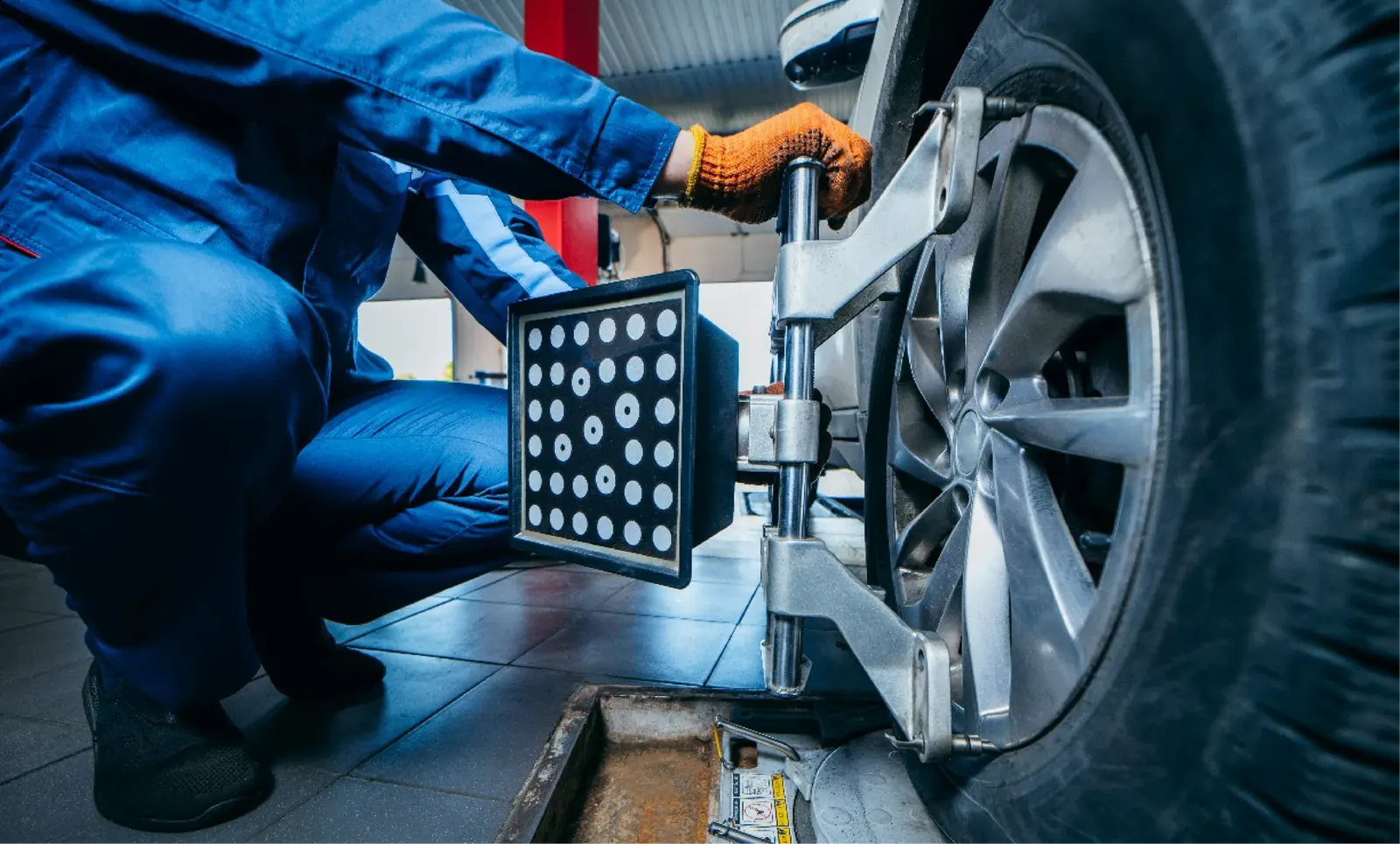
Alignment is checked with specialist equipment that measures the angles of each wheel and compares them with the manufacturer's figures. Any adjustment is then made to the steering and suspension so the wheels sit where they should.

It is a good idea to have alignment checked after a hard knock to a wheel, after steering or suspension parts have been replaced, or if you notice uneven wear when your tyres are changed.

Signs your car needs an alignment check

Alignment problems show up as the car not tracking straight, and as wear concentrated on one edge of the tyre. These symptoms are different from the vibration you get from an unbalanced wheel.

A quick check is to drive slowly on a straight, flat road with little camber and see whether the car drifts when you relax your grip. Many roads slope towards the kerb for drainage, so a slight drift to the left is not always a fault.

  • The car pulls or drifts to one side on a straight, level road
  • The steering wheel sits off-centre when driving straight
  • Rapid wear on the inner or outer edge of a tyre
  • Symptoms that started after a hard kerb strike or a deep pothole

Which one do you need?

As a rule of thumb, if the car shakes, think balancing. If it pulls, or the tyres are wearing on one edge, think alignment. If you have both symptoms, you may need both.

Some symptoms have other causes too. A pull can come from a tyre that is low on pressure, and vibration can come from a damaged tyre with a bulge, a buckled wheel or worn suspension parts. Checking tyre pressures and looking for visible damage is a good first step.

Getting both right matters when you fit new tyres. A new tyre on a wheel that is out of balance or out of alignment can start wearing unevenly from day one.

Potholes are a common trigger for both. A hard strike can knock a balance weight off or bend a rim, causing vibration, and it can also shift the alignment so the car pulls. After a heavy impact, check the tyre and wheel for bulges, cuts or visible damage before deciding what else needs doing.

Wheel rotation is a third, separate job. It moves tyres between positions on the car to even out wear, since front tyres on front-wheel-drive cars usually wear faster. It does not correct balance or alignment, but it works well alongside them.

What we offer and what we don't

We provide wheel balancing as part of our mobile service, including car and alloy wheel balancing and precision tyre balancing. We also offer wheel rotation, which moves tyres between positions so they wear more evenly.

We do not offer wheel alignment. Alignment needs specialist equipment, so if your symptoms point that way, we recommend a garage with alignment equipment. If we spot edge wear during a tyre inspection, we will tell you so you can get it checked.

Balancing on site saves you a trip. Our vans carry the equipment, so we can balance wheels on your driveway or at your workplace, either as part of fitting new tyres or as a separate visit if you have noticed a vibration.

How Mobile Tyre Fitting Today can help

If you have vibration through the steering wheel or seat, or you are fitting new tyres, call us on 07356 062568. We answer 24/7 and come to your home, workplace or roadside across Surrey, south and south-west London and West Sussex.

Our fully equipped vans carry the tools to balance wheels on site, and we reach most locations within 30 minutes. Every visit includes a tyre inspection, and our pricing is fair and transparent with no hidden fees.

Questions drivers ask

Still unsure? Call 07356 062568 any time, day or night.

07356 062568

Is wheel balancing the same as tracking?

No. Tracking is another name for wheel alignment, which sets the angles of the wheels. Wheel balancing corrects uneven weight around the wheel and tyre so it spins smoothly. Balancing fixes vibration, while alignment fixes pulling to one side and uneven edge wear.

Do new tyres need balancing?

Yes. A wheel should be balanced whenever a new tyre is fitted, because every tyre has small weight differences that can cause vibration. When we fit new tyres, the wheels are balanced as part of the job so the car drives smoothly from the start.

Can unbalanced wheels cause uneven tyre wear?

Yes. Unbalanced wheels can cause uneven tyre wear, often in patches, as well as vibration and extra strain on suspension parts. Wear concentrated on the inner or outer edge is more often linked to alignment, tyre pressures or worn suspension.

Why does my car vibrate at motorway speeds?

The most common cause is an unbalanced wheel, which tends to show up at higher speeds. Other possible causes include a damaged or bulging tyre, a buckled wheel or worn suspension parts. Check the tyres for visible damage, and if it persists, have the wheels balanced and inspected.

Do you offer wheel alignment?

No, we do not offer wheel alignment. We provide mobile wheel balancing, wheel rotation, tyre fitting and tyre repair. If your car pulls to one side or a tyre is wearing on one edge, we recommend a garage with alignment equipment, and we will flag anything we notice during our tyre inspection.

Need a tyre fitted now?

07356 062568

Our mobile tyre fitters come to your home, workplace or roadside across Surrey, South London and West Sussex, 24 hours a day.

Call nowWhatsApp