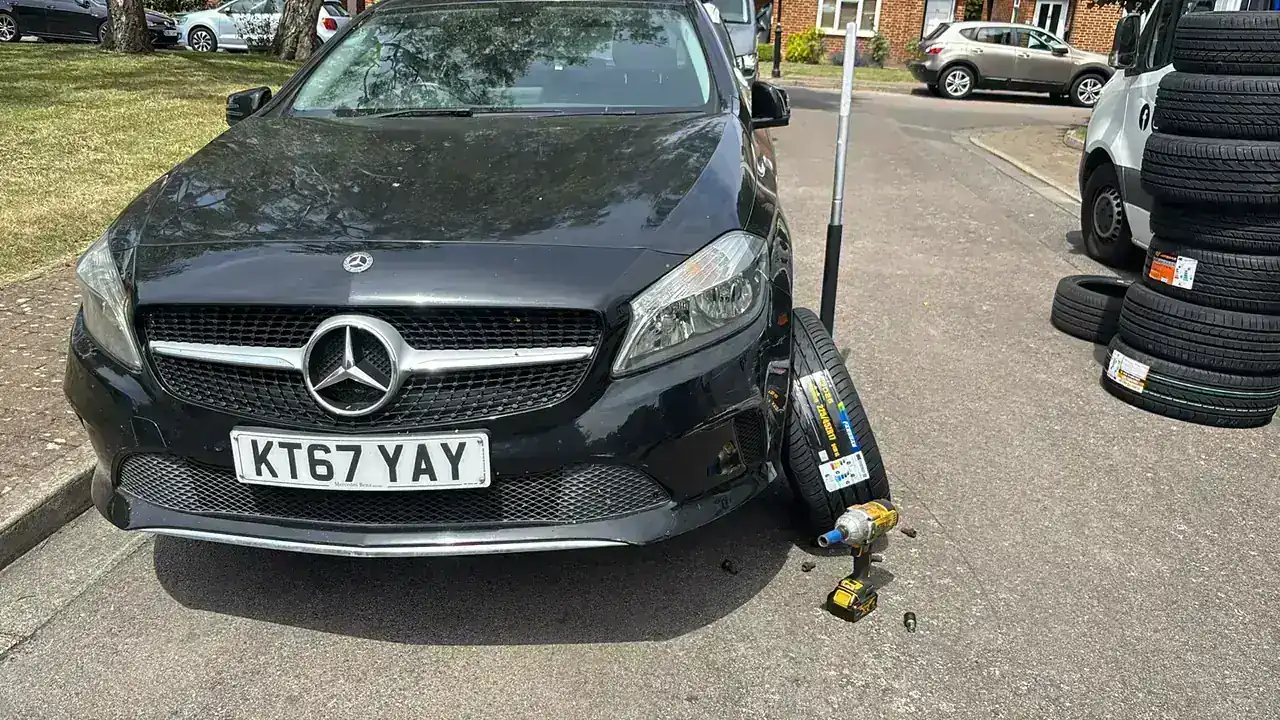

Why many cars have no spare wheel
Many drivers only find out there is no spare wheel under the boot floor when they get a flat tyre. The AA points out that car makers are under no legal obligation to provide a full-size spare, and few new cars now come with one because of the weight, space and cost involved.
Cars without a spare normally rely on one of two things. Many carry a temporary puncture repair kit, usually a bottle of sealant and a small electric compressor, while others are fitted with run-flat tyres that can keep going for a limited distance after losing pressure.
It is worth knowing which your car has before you need it. Check under the boot floor and read the puncture section of the handbook at home.
First, get yourself somewhere safe
The Highway Code says that if you have a flat tyre, you should stop as soon as it is safe to do so, ideally in a place of relative safety where you and the car are less likely to be at risk from moving traffic. The RAC adds that it is better to drive a little further and risk damaging the wheel rim than to stop somewhere dangerous, such as a narrow road.
On an ordinary road, the Highway Code says a warning triangle can go at least 45 metres behind the car on the same side of the road, but never on a motorway. If you are on a motorway, the steps are different, and our separate motorway guide covers them.
- Stop as soon as it is safe, ideally in a car park or lay-by
- Switch on your hazard lights, plus sidelights if it is dark or visibility is poor
- Wear something light-coloured or fluorescent in daylight, or reflective at night
- Get passengers out and keep everyone away from the car and the traffic
- Do not stand between the car and oncoming traffic
- Never put a warning triangle on a motorway
How to use a tyre sealant and inflation kit
A sealant kit is a temporary measure to get you to a tyre fitter after a small puncture. TyreSafe describes the process: attach the sealant bottle to the tyre valve, use the compressor to inflate the tyre and push the sealant inside, then drive a short distance so the sealant can spread and seal the hole.
Kits differ, so follow the instructions in your handbook and on the kit. Some pump the sealant in with the compressor, while with others you squeeze it in by hand through an adapter. Do not exceed the maximum speed shown in the handbook and usually on the kit itself.
- Park safely, apply the handbrake and get passengers out
- Find the puncture and leave any nail or screw in place
- Inflate the tyre to the pressure given in your handbook
- Drive a short distance so the sealant spreads, then recheck the pressure if the instructions say so
- If the tyre will not inflate or hold pressure, it may be too damaged, so stop and call for help
- Go straight to a tyre fitter, within the kit's speed and distance limits
What a sealant kit cannot fix
Sealant only works on small holes in the main tread. The RAC says the largest hole a kit can deal with varies between products, commonly from 4mm to 6mm, so check what yours allows.
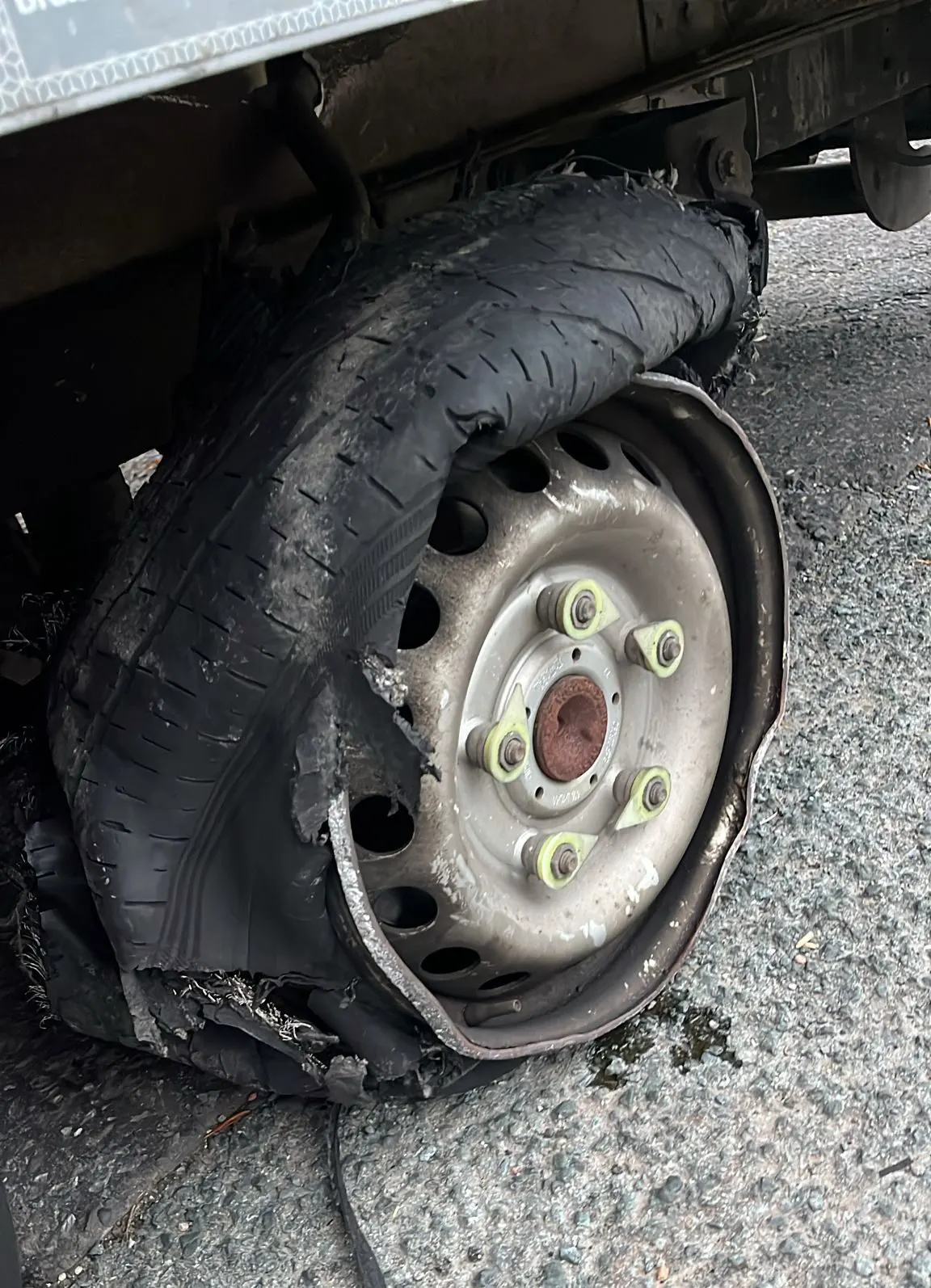
Do not use sealant on sidewall damage, a blowout, a damaged wheel or a tyre that has been driven while flat. The AA adds that kits can be quick and effective on simple punctures, but not if running the tyre flat has damaged or overheated it.
Even when it works, sealant is a stopgap. TyreSafe says liquid sealants cannot be considered a permanent repair, and both the RAC and the AA say the sealant needs replacing once it has been used, so the kit is ready next time.
| Situation | Sealant kit |
|---|---|
| Small puncture in the main tread, such as a nail or screw | Often works as a temporary fix |
| Hole larger than the kit allows, commonly 4mm to 6mm | Unlikely to work |
| Cut, tear or bulge in the sidewall | Do not use |
| Blowout | Do not use |
| Damaged or cracked wheel | Do not use |
| Tyre already driven on while flat | Do not use |
If your car has run-flat tyres
Some cars have no spare because they are fitted with run-flat tyres, which are built to keep supporting the car for a limited distance after losing pressure. The AA notes that run-flats have a limited range and speed once punctured.
The RAC says many run-flats allow limited driving after pressure loss, commonly up to 50 miles at no more than 50mph, but the precise limit varies. Check your handbook, drive gently and have the tyre inspected as soon as possible. Our run-flat puncture guide covers repairs and replacements in more detail.
When to call a mobile tyre fitter
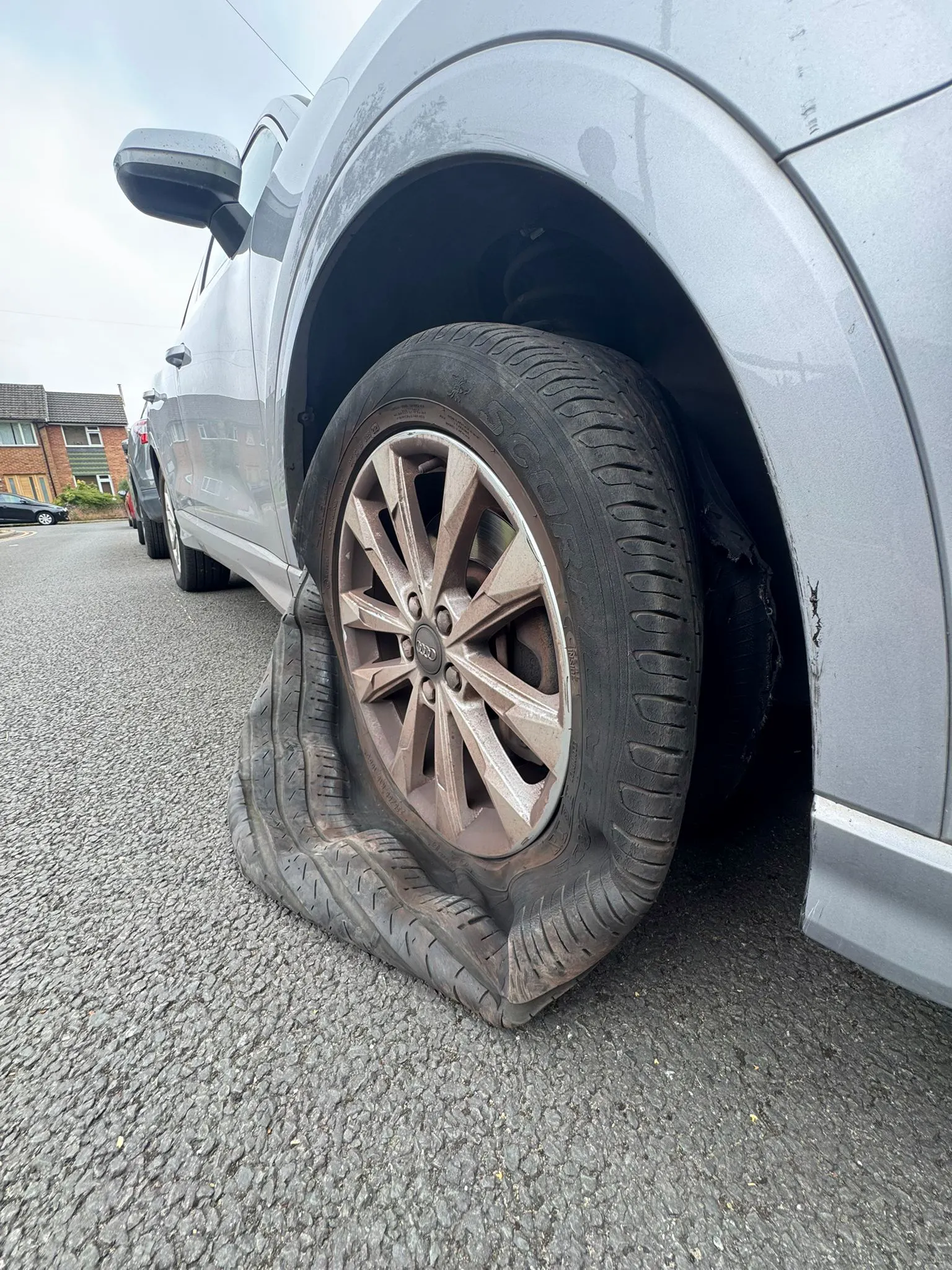
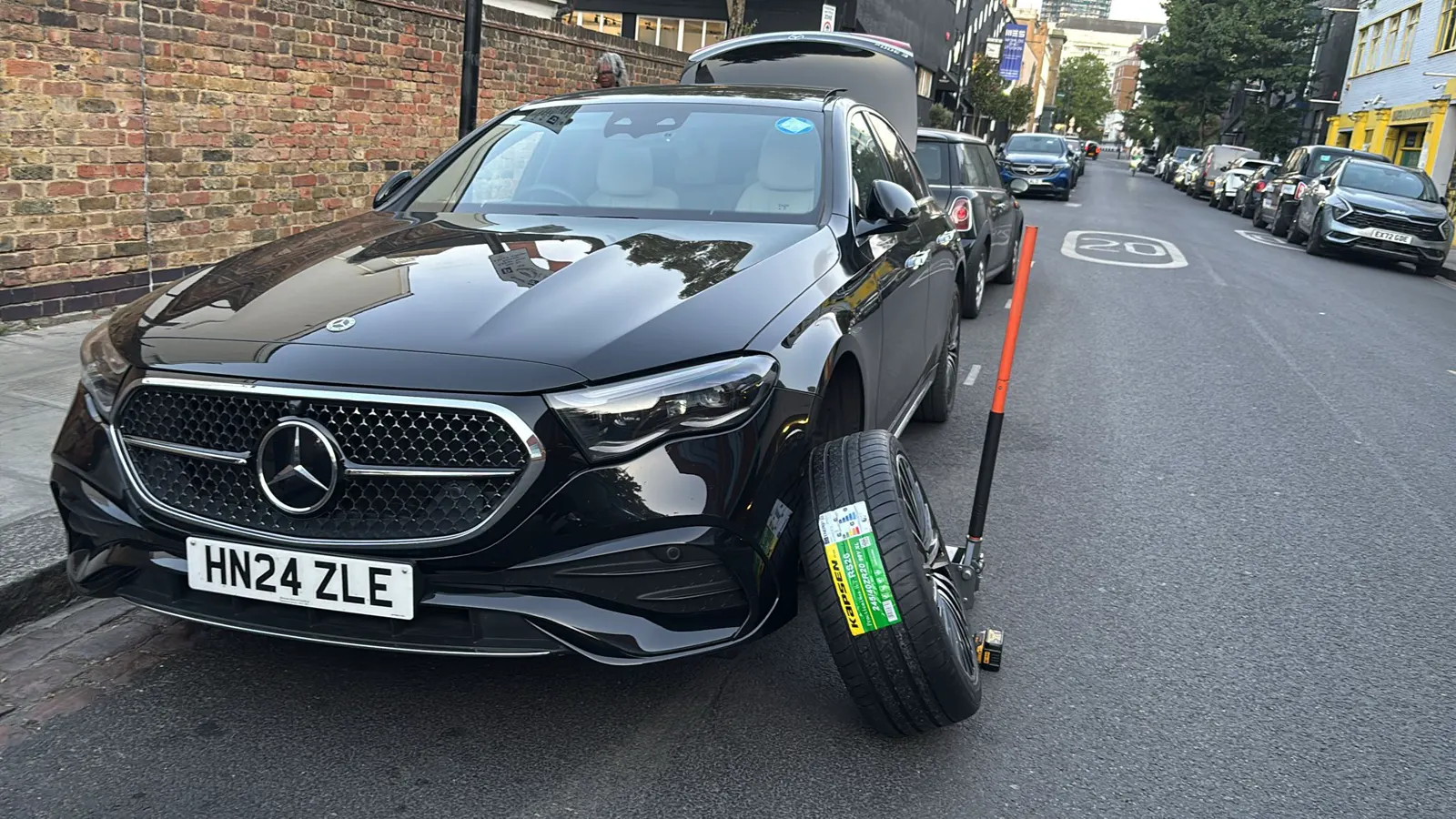
If the kit is not suitable or will not seal the hole, call for help that comes to you. A mobile tyre fitter brings tyres and tools to the car, so a missing spare does not matter, and the tyre can be repaired or replaced where it is parked if it is safe to work there.
Every call-out we attend includes a tyre inspection to decide whether a safe repair is possible or a replacement is needed. Drivers in Surrey, south and south-west London and West Sussex can call us on 07356 062568 24/7. On a motorway, use your breakdown provider or National Highways to get the car somewhere safe first.
A few details help the fitter bring the right tyre and tools, so have them ready when you call. A clear photo of the sidewall and the damage is useful too.
- Where the car is, with a postcode or nearby landmark
- The tyre size from the sidewall, such as 205/55 R16 91V
- Where the damage is, and whether you can see a nail, a cut or a bulge
- Whether you have already used a sealant kit
- Whether the car has locking wheel nuts, and where the key is
Should you carry a spare wheel?
If a flat with no spare has caught you out, you may want a back-up. The AA says some manufacturers offer a full-size spare as an option on new cars, and you can also buy one from a parts counter. You will also need a jack, a wheel brace and, if your car has locking nuts, the key.
A space-saver spare is often a different size from your normal tyres and comes with speed restrictions. TyreSafe advises never exceeding the recommended maximum speed on a temporary spare and observing its minimum inflation pressure.
Whatever you carry, check it when you check your tyres. The AA points out that a spare can only legally be used in place of a road wheel if it is in good condition and meets the minimum tread requirements.
Related services
If you are stuck with a flat tyre and no spare, our emergency tyre assistance runs 24 hours a day.
If the tyre needs replacing, our mobile tyre fitting service brings a new one to where the car is parked.
If a locking nut is holding the wheel on and the key is missing, ask about locking wheel nut removal when you call.
Do new cars have to come with a spare wheel?
No. The AA points out that car makers are under no legal obligation to provide a full-size spare, and many new cars come with a sealant kit or run-flat tyres instead. If you do fit a spare, it must be in good condition and meet the minimum tread requirements.
How far can I drive after using a tyre sealant kit?
Only as far as you need to reach a tyre fitter. Each kit has its own speed and distance limits, usually shown on the kit and in the handbook, and the fix is temporary. Have the tyre inspected as soon as you can, and tell the fitter that sealant has been used.
Will a sealant kit fix a sidewall puncture?
No. The RAC advises against using sealant on sidewall damage, a blowout, a damaged wheel or a tyre that has been driven while flat. Sidewall damage cannot be repaired under the British Standard BS AU 159 either, so the tyre will need replacing.
Can a mobile tyre fitter help if I have no spare?
Yes. A mobile fitter brings the tyre and tools to the car, so you do not need a spare. We come to homes, workplaces and safe roadside locations across Surrey, south and south-west London and West Sussex. Call us with your tyre size and we'll confirm what we can bring.
Should I put out a warning triangle?
On an ordinary road, the Highway Code says you can place a warning triangle at least 45 metres behind the car on the same side of the road, taking great care when you place it and collect it. Never use one on a motorway. If placing it would mean walking close to fast traffic, leave it in the boot.